Showing posts with label Evolution. Show all posts

27 August, 2011

How many complex species are there on Earth?

About 8.7 million.

And how many have we found to date?

About 1.2 million.

That is according to a recent study in PLoS Biology:

Knowing the number of species on Earth is one of the most basic yet elusive questions in science. Unfortunately, obtaining an accurate number is constrained by the fact that most species remain to be described and because indirect attempts to answer this question have been highly controversial. Here, we document that the taxonomic classification of species into higher taxonomic groups (from genera to phyla) follows a consistent pattern from which the total number of species in any taxonomic group can be predicted. Assessment of this pattern for all kingdoms of life on Earth predicts ~8.7 million (±1.3 million SE) species globally, of which ~2.2 million (±0.18 million SE) are marine. Our results suggest that some 86% of the species on Earth, and 91% in the ocean, still await description. Closing this knowledge gap will require a renewed interest in exploration and taxonomy, and a continuing effort to catalogue existing biodiversity data in publicly available databases.

Here is a table from the paper (click to enlarge) showing the vast difference in the numbers of catalogued and predicted species, which really highlights how little we know about life on our planet (particularly in the ocean).


An interesting calculation made in the study was the approximate cost and man power it would take to catalogue all of the species that are currently unaccounted for:

Considering current rates of description of eukaryote species in the last 20 years (i.e., 6,200 species per year; ±811 SD; Figure 3F–3J), the average number of new species described per taxonomist's career (i.e., 24.8 species, [30]) and the estimated average cost to describe animal species (i.e., US$48,500 per species [30]) and assuming that these values remain constant and are general among taxonomic groups, describing Earth's remaining species may take as long as 1,200 years and would require 303,000 taxonomists at an approximated cost of US$364 billion.


On the subject of species diversity, here is a nice 'tangled bush' image (click to enlarge then zoom in):


Read More...

15 June, 2011

Altruistic ape

In case anyone thinks that altruism is only a human trait, watch how the orangutan in the below video saves a small duck from drowning. The video was shot in 2008 in Dublin Zoo but has only recently appeared on the internet.


Since humans share a common ancestor with other apes, it makes sense that we should find supposedly 'human traits' in orangutans, chimpanzees and gorillas (and we do). But what sense does this make in a Creationist worldview?


-----------------------------------------------

Edit: A copyright row has emerged from the above video going viral. It seems that the Daily Mail bought the clip from News Team International, and not from the original cameraman who actually owns the copyright. He'll surely get a nice few quid out of it now.

Read More...

12 January, 2011

Back in Ireland

There hasn't been much action on my blog in the last two months due to personal cicumstances. I have moved back to Dublin having spent the last 14 months in London. I had a great time over there but it was time to come home (for a variety of reasons that I'm not going to go into).

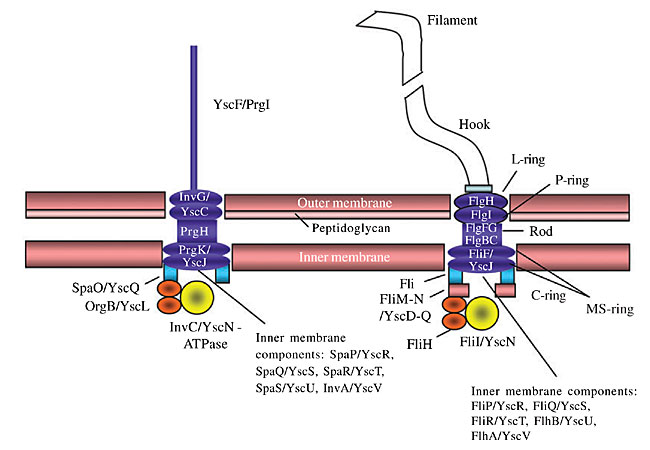
Anyway, I'm back doing frontline research again. And by a strange twist of fate it turns out that part of my research will be on the type III secretion system in bacteria (below on the left). This system shot to prominence during the Dover trial, as it is the very system that is proposed to be an evolutionary precursor to the flagellum (below on the right). See more about the relationship here, and a great talk by Ken Miller on it here. Of course, my research will be with respect to the infectious elements of the type III secretion system and so it is unlikely to overlap with its interesting role in refuting intelligent design.

Read More...

03 December, 2010

Evolutionary morality - what's the problem?

Seriously, what is the issue that theists have with a non-devine account for morality? Let's settle this once and for all (he said naively).

Here is what I see as a perfectly rational account for evolutionary morality. The overall explanation is one of empathy and the so-called 'Golden rule' - treat others as you would like others to treat you. It is important to stress that this 'rule' is not the type of law that a theist would claim is prescribed from a deity. That is, we don't have to follow the golden rule, but most of us choose to because we can see the consequences of what would happen if we did not. For example, I wouldn't like it if someone stole from me, so I don't steal from other people. On the basis of this, I consider stealing to be wrong. When the majority of a population consider stealing to be wrong, the consensus usually becomes what is known as 'morality'. This still allows for a minority of a population to think differently - a thief might think it is OK to steal, or might think it is wrong but will do it anyway.

This leads us to moral relativism. More on this later, but first I want to get back to the evolution of morality...

All social animals have to co-operate to survive. This means that the survival of the herd is crucial for the survival of the individual. Any member of a population of social animals that ventures out on its own has a poor chance of survival - be it an isolated deer in a field or a lone mountaineer in the Alps. This is not to say that they cannot survive - some might - but in general there is safety in numbers.

Where'd they go?

Genes promoting co-operation and empathy, therefore, would be selected for in a social population, and through trial and error the 'golden rule' would unintentionally take hold. A population in which the 'golden rule' wasn't followed wouldn't sustain itself for very long, as its members would either kill each other or be killed by predators due to a lack of co-operation.

An interesting theory on the roots of morality and the Golden rule comes from game theory. This can be simplified (*extremely simplified*) into a game called the Prisoner's Dilemma. Here is a synopsis of the game from Wiki:

Two suspects are arrested by the police. The police have insufficient evidence for a conviction, and, having separated the prisoners, visit each of them to offer the same deal. If one testifies for the prosecution against the other (defects) and the other remains silent (co-operates), the defector goes free and the silent accomplice receives the full 10-year sentence. If both remain silent, both prisoners are sentenced to only six months in jail for a minor charge. If each betrays the other, each receives a five-year sentence. Each prisoner must choose to betray the other or to remain silent. Each one is assured that the other would not know about the betrayal before the end of the investigation. How should the prisoners act?

So the choice is to defect or co-operate. In a one-off situation, the obvious answer seems to be to defect. But it gets more interesting when, rather than being a one-off situation, the game is played continuously with previous actions remembered by the participants (as would occur in real life situations). The longer the game is played, a pay-off matrix emerges and the more likely it is that the participants will develop a strategy in which they actually co-operate most of the time, as when they defect, their opponent will simply retaliate in the next round.

Richard Dawkins has a chapter on the relationship between game theory and morality in the Selfish Gene. In it he explains how the above game can be applied to social animals in a 'you scratch my back, I'll scratch yours' type of way. Animals with the capacity to remember past events will reward those who co-operate and punish those who defect. This leads to a situation where the majority of a population will be co-operative, as they want to avoid the harsh penalties imposed on those who defect. From this interplay, co-operative behaviour (which loosely means 'being nice') becomes the norm and is considered to be 'moral'. Of course, if the vast majority of people are co-operative, then isolated incidences of defective behaviour can be rewarding, but it is ultimately unsustainable as the co-operative masses will retaliate. Importantly, all of this behaviour is still directly related to the Golden rule and is a consequence of the individual's desire to survive.

Evidence that co-operative behaviour with occasional retaliation is the optimal social standpoint is given by the computer program Tit-for-Tat that was entered into the iterated prisoners dilemma (IPD) tournament, a competition devised to develop the best strategy to win at repeated playing of the prisoners dilemma. Many complex computer programs were entered in the tournament, but Tit-for-Tat won using a very simple strategy:

It was the simplest of any program entered, containing only four lines of BASIC, and won the contest. The strategy is simply to co-operate on the first iteration of the game; after that, the player does what his or her opponent did on the previous move. Depending on the situation, a slightly better strategy can be "tit for tat with forgiveness." When the opponent defects, on the next move, the player sometimes co-operates anyway, with a small probability (around 1–5%). This allows for occasional recovery from getting trapped in a cycle of defections. The exact probability depends on the line-up of opponents

The story of Tit-for-Tat is well worth a read.

Based on the Tit-for-Tat program, the overall qualities needed to be socially successful are being nice, forgiving and non-envious but retaliating to defective behaviour when necessary. When you think about it, these qualites are exactly what any successful social animal possess:

- Unless provoked, the agent will always co-operate

- If provoked, the agent will retaliate

- The agent is quick to forgive

- The agent must have a good chance of competing against the opponent more than once.

Tit-for-tat, eventually...

Game theory, therefore, provides an intriguing and plausible reason for why humans are predominantly moral beings, and have the capacity to co-operate and forgive. Of course, none of this means that they have to be co-operative, although we have devised laws to punish those who are not. This is because there are no absolute moral laws; instead, there are evolutionary behaviours that allow populations to reach a sustainable equilibrium.

Which brings us back to moral relativism.

A typical theistic response to the idea of moral relativism (the position that moral propositions do not reflect absolute or universal truths) is to propose an emotionally-charged situation and claim that the moral relativist cannot claim that it is absolutely wrong. A common example is torturing or raping children. I have heard many theists claim that I can't say that torturing children is absolutely wrong. That may be true. But I can say it is wrong according to my moral standards because I would not like to be tortured, and so I imagine other people also don't like to be tortured (the fact that they are children is irrelevant - torture is torture).

It's a difficult subject to talk about, but one can imagine a hypothetical scenario in which torturing a child is acceptable, if, say, the alternative is that 100 children will be tortured. Horrible, I know, but I am simply making the point that emotionally-charged scenarios are not necessarily a fool-proof approach to tackling moral relativism. They do not actually have much substance other than to cloud the mind of an undecided observer in a debate.

However, if theists insist on using these types of emotionally-charged scenarios (and they do), then they can easily be used against the notion of divinely-inspired morality - a nice example of Tit-for-Tat in action! This is because if morality is simply the reflection of the nature of a deity, then it is dependent on something, and so it cannot be absolute. It is, in fact, completely arbitrary as the deity could have any number of whims or characteristics, which would automatically become entrenched in morality (see Euthyphro's dilemma). For example, if God (being omnipotent) decided tomorrow that child torture was morally good, would all Christians embrace it and actively engage in it? I very much doubt that they would. Why? Because morality exists apart from God.

Human morality came about through the evolution of social behaviour. That theists want to ascribe something as wonderful as morality to an unproven deity is just another example of how religion tries to fix what ain't broke.

Read More...

17 November, 2010

Michael Behe lecture

Intelligent design proponent Michael Behe is giving a talk in London on Monday 22nd November as part of his tour of the UK. From the ad:

200 bones. 600 muscles. Millions of nerves. Billions of cells. Trillions of organisms all working together to make one body - you. But how? An accident of evolution?

Book now for the 'Darwin or Design?' tour featuring US scientist Prof. Michael Behe and hear why he claims to have discovered evidence that life is really designed - findings that have rocked the scientific world.

The 'Darwin or Design?' national tour starts Sat 20th November. See and hear the scientific case for Intelligent Design from its leading voice - Prof Michael Behe.

Ask your questions live from the floor - engage personally with Mike Behe.


I'll be there. I would like to hear his comments on the following:


1) Behe claims that intelligent design is falsifiable, in that if someone can show how an 'irreducibly complex' system evolved in a stepwise fashion, then intelligent design would be proved incorrect. But this seems unlikely to me. If someone showed how the flagellum evolved step-by-step, Behe could simply say 'OK, the flagellum wasn't intelligently designed, but the immune system was'. In other words, he can always move around and point to another supposedly irreducibly complex system to support his argument. I think this refutes the notion that intelligent design is falsifiable.


2) If we base our knowledge of design on human design, as ID proponents do, then we must base our knowledge of intelligent designers on humans. So if ID is true, this means that intelligent designers (humans) are themselves designed by a intelligent designer. But crucially this 'earlier' intelligent designer is subject to the same criteria and so must also have been designed. This inevitably leads to an infinite regress of designers and a continual begging of the same question. I expand on this point here.


3) Behe claims that a system is irreducibly complex by the following:

By irreducible complexity I mean a single system composed of several well-matched, interacting parts that contribute to the basic function, wherein the removal of any one of the parts causes the system to effectively cease functioning

The problem is that this isn't evidence of intelligent design. It is actually predicted to happen by evolutionary theory. These ‘irreducibly complex’ systems CAN evolve through step-by-step neo-Darwinian evolution. Herman Muller described the process back in 1918. For example, take a relatively complex system that performs a function. Next, gradually make that system more efficient and sophisticated by step-by-step addition of new “parts”. Then, remove some of the earlier redundant “parts” (as happens in evolution) thus increasing efficiency. You now have a more complex system than the previous one, however, if you were to artificially remove a “part” of this new system, it would cease to function. As you should be able to see, this does not mean that it couldn’t have evolved.

Here is an analogy...

Imagine a river with three stepping stones forming a rudimentary bridge. The stones constitute a system with a function. If you add a long piece of wood across all three stones it is now a slightly more complex system, still with the same function. The middle stone can now be removed without loss of function, and this newer (slightly) more complex system is more efficient in that you can walk across it rather than hopping from stone to stone. If you now remove any of the other parts of this system, ie the wood or the two outer stones, it will lose its function, and thus the bridge can be termed irreducibly complex. However, it came about in a step-by-step fashion (which includes removal of redundant parts) without loss of function.


-----------------------------------------------------------------------

Edit 01/12/10

I was unable to attend the talk but PaulJ has provided a report.

Read More...

14 September, 2010

When a complete moron meets an absolute idiot

Irish politicians can be stupid, like Dermot Ahern. Or very stupid, like Willie O'Dea. But occasionally they are so stupendously stupid that it defies all belief....

Meet Conor Lenihan (our complete moron).

This man is the Minister for Science, a position you might think entails encouraging the best in science and rational thought. Why then, you might ask, did this complete moron agree to attend the launch of "The Origin of Specious Nonsense", an anti-evolution book by a crank called John May (our absolute idiot)?

Don't get me wrong. I have no problem with idiots launching books, but I do have a problem with a highly-paid public servant - who is supposed to be the Minister of Freakin' Science - actively promoting it. The fact that he eventually withdrew from the launch is irrelevant. He should have never even flirted with the idea. Hell, he should have been fundamentally opposed to it to begin with!

Let's have a quick look at what he almost gave an official Irish government stamp of approval to. From May's website:


Eh, what? H2O is oxygen. Oh and evolution doesn't explain astrophysics, THEREFORE IT'S WRONG!!!!!! TAKE THAT EVOLUTIONISTS!!!!!

His painfully stupid '15 tennis ball' analogy shows his complete ignorance of evolution, probability and large numbers. As I explain here (scroll down to no 12 on the page), his error is that he is predicting in advance what the outcome will be - all balls to land in a circle in correct order. This is not analogous to how evolution works so he is simply attacking against a strawman. The balls have to end up in some orientation, just as life had to evolve in some way. In fact, it is actually evolution deniers who believe that life improbably *poofed* into existence fully formed. May is so stupid that he doesn't even realise his astronomical numbers argument goes against his own beliefs.


But not only is the subject matter laughable - it is full of grammatical errors. Indeed, he is clearly unimpressed by the modest comma and yet he can't seem! to! fit! quite! enough! exclamation! marks! in! (hmm, a true sign of a scholarly genius?). Bad grammar is no crime of course, but along with the basic language used in his book (see here for a sneak preview), this suggests that May is less than proficient in the brain department (fittingly for a friend of Minister Lenihan it would seem). For example, take these quotes as attributed to May in the Irish Times:

In publicity material for the launch of his book on the theory of evolution, Mr May accused “Richard Dawkins, Sam Harris, Christopher Hitchens, Daniel C Dennett, et al” of having “sacrificed reason on the altar of Chance, Mutations, Randomness . . .” Mr May called on “the world’s atheists, scientists, evolutionists plus tens of millions of their duped followers” to stop pretending they had “any facts whatsoever to support the greatest deceit in the history of science”.

No facts! Eh, try here and here for starters.

Furthermore, with respect to the bolded phrase above, an acquaintance of mine who is a notable Irish physicist and accomplished debater mused...

We used to get first years to work the phrase "sacrificed [noun] on the altar of [another noun]" into their debates as a kind of an in-joke in debating circles. It was such a hackneyed cliche that it would be a silent nod to older debaters from other teams that these were freshers and to go easy on them.

Speaks volumes.

Read More...

13 September, 2010

If Facebook had always existed

In the beginning...


5,600 years later...


249 years later...


[More here]

Read More...

09 August, 2010

How many times can a creationist contradict himself in 10 minutes?


I'm posting this debate not because you should watch it all (although by all means do), but because of the ridiculous hypocritical argument the creationist employs. I'll talk you through it...

At 2:59, he claims that he knows many scientists that believe in creation, even going so far as to say he has 'lists of scientists' that agree with him - a clear claim to authority. If these scientists believe it, then there must be merit to it. Argument from authority is clearly good.

Then at 5:36, the host says that the vast majority of scientists accept evolution, and the creationist argues against this by stating that 'the majority doesn't decide what's right, what's right is right'. OK, I see, so argument from authority is bad?

But then, straight after this at 6:30, he again claims that he can 'come up with lists of hundreds of scientists' that agree with him. Wait, so this argument is good again?

6:46 The host again says that almost all science departments accept evolution. Creationist: 'That doesn't mean it's right'. Now it's bad again. This is confusing!

11:44 Finally, when the creationist is asked if the list he is talking about is the Discovery Institute list, the response is 'that's only one of many' and he proceeds to show three pages of biologists that agree with him. Not one, not two, but three whole pages. I imagine you can fit a lot of names onto three pages. And they are biologists too! So argument from authority is definitely good.


Of course when asked, the evolutionist states at 11:29 that the majority support evolution because the data supports it and rightly rejects the argument from authority. Plain, simple and consistent.

Read More...

06 May, 2010

Has the Expelled website been expelled?

I'm sure you have all heard of the movie Expelled: No Intelligence Allowed. It's a propaganda piece featuring Ben Stein which attempts to link Darwin and evolutionary theory with the Holocaust and promote intelligent design as an alternative.

You can watch it here (active at time of writing).


Well, just after it was released, I used to visit the official Expelled website and interact with others on the comment section of the blog. I hadn't been there in a while so I thought I'd have a look and see what wacky stuff was going on there now.

Well, none, because it doesn't exist anymore.........have a look

Now the fact that it's disappeared is interesting as one of the claims by it's producers was that it would be so successful that it might well beat Michael Moore's Farenheit 911 in terms of opening figures:

Ruloff said the film could top the $23.9-million opening for Michael Moore's polemic against President Bush, "Fahrenheit 9/11," the best launch ever for a documentary.

It seems strange for the website of such an apparently popular and successful movie to just not exist anymore. It can't be due to the 'age' of the movie as it was only made in 2008, and yet the websites for Michael Moore's Bowling for Columbine (2002), Farenheit 911 (2004) and Sicko (2007) are all still active.

Nope, this is just a sign of how little interest people had in this complete flop. For more info on the movie and an exposure of the dishonesty of the people behind it, see here.

Read More...

23 December, 2009

Evolution of the Immune System

One of the major arguments of Michael Behe in the Dover trial, in which intelligent design creationism was shown up to be the vacuous nonsense that it is, was that the immune system is too complex to have evolved through purely natural processes. I think its reasonable to assume that for someone to make such a wide, sweeping claim they must be up to date with the literature...

Not Behe.

In fact, when presented with a stack of thick textbooks, all of which included chapters on the evolution of the immune system, Behe had to admit that he hadn't read any of them. Not one!

Let's just say that his honour, Judge Jones, was not amused. And, of course, the rest is history.

Well in the January edition of Nature Reviews Immunology, there is an interesting commentary on the very subject that Behe knows nothing about, and yet feels qualified enough to dismiss - evolution of the immune system.

How did our complex immune system evolve?

Max Cooper and Brantley Herrin discuss the evolution of innate and alternative adaptive immune systems for defence purposes and conclude that successful vaccines and other therapeutic manipulations of the immune system will require a composite strategy.

The immune system basically consists of two arms, innate and adaptive immunity (although, as ever, this is an oversimplified account).

Innate immunity works tirelessly to keep you free from infection every second of every day. If you need any evidence of this, think of how quickly an unrefridgerated body can decompose following death. And innate immunity isn't picky; it will protect you against anything it recognises as foreign. If you've heard of interluekin, interferon, TNF, macrophages, neutrophils, Toll-like receptors or complement, you've heard of innate immunity.

In comparison, the adaptive immune system is only called upon when innate immunity fails to eliminate a microscopic invader. But let me tell you, that little bug is in for a whole lot of trouble, because the adaptive immune system will target it specifically and mount a massive immune response to attack it. If innate immunity is like low level police constantly patrolling the streets, adaptive immunity is more like an elite squad of detectives and sharpshooters out to get their man. Common players in adaptive immunity include T cells, B cells and antibodies.

However, the benefits of adaptive immunity are only enjoyed by higher eukaryotes, including me, you and anything with a backbone. Organisms 'below' this in the evolutionary tree make do with innate immunity alone - indicative of the power and efficiency of the innate immune system. We share many innate immune components with mice, chickens, fish, fruit flies and even plants (in fact, in the same issue of Nature Reviews Immunology there is a whole review dedicated to a comparison of our innate immune system with that of the worm). And as one would expect if the immune system evolved, the closer we are to another species in the evolutionary tree, the more sequence similarity we find in the genes encoding these common proteins.

How does Behe explain this?... Well who knows, but my guess would be that he'd trolley out the usual creationist line that similar sequence could simply mean similar designer. Of course, the existence of endogenous retroviruses easily refutes this argument, but that is something for another day (but if you want to know more right now, click here).

As mentioned, the adaptive immune system is found exclusively in vertebrates. Cooper and Herrin discuss recent work that has cast new light on the evolution of adaptive immunity. It turns out that jawless vertebrates (hagfish and lamprey) have an adaptive immune system that functions slightly differently - in fact, the preliminary work on this was published in 2004, you know, before Dover. Specifically, hagfish and lamprey use entirely different types of antigen recognition receptor, meaning they use different proteins than we do to identify foreign pathogens. However, despite this difference, following recognition we all use similar mechanisms to direct our immune response to eliminate the invader.

Now the exact step-by-step evolutionary pathway that created these two different adaptive immune systems isn't known. Of course it isn't. It's completely unreasonable to expect that level of detail to be discovered, and Behe knows this. That's the reason he uses this type of argument - it's classic God-of-the-gaps drivel. However, based on current knowledge the authors sum up the probable evolutionary mechanisms involved:

The evolution of alternative adaptive immune systems was facilitated by two rounds of whole genome duplication, which enabled the original function of a gene to be maintained while allowing evolutionary selection of modifications of additional gene copies for new purposes. The common ancestor of lamprey and hagfish probably emerged between the first and second rounds of genome duplication, as amphioxus and tunicates have single gene copies, lamprey have two gene copies and jawed vertebrates typically have four copies of retained genes.

And of course, as usual with real science, this work leads to more questions:

Such convergent evolution of mechanisms for the generation of diverse antigen receptors after the split in jawless and jawed vertebrate ancestry raises the question of whether the two pathways of lymphocyte differentiation arose in a common vertebrate ancestor.

It's nice to know that people are working on this stuff, as opposed to others who try to stifle science with fanciful stories about mousetraps and magic.

Read More...

21 October, 2009

Human Chromosome 2 Fusion

This topic has been discussed many times over on the interwebz, but I thought I'd just add my own explanation of it anyway...

A valid question one might ask about the evolutionary relationship between humans and chimpanzees is this - why do the human and chimpanzee genomes have different numbers of chromosomes when evolutionary theory insists that we are so closely related?

The story of how this apparent stumbling block was resolved is one of the greatest triumphs for evolutionary theory over ID/creationism.

The Great Apes, as in chimps, gorillas and orangutans, have 24 pairs of chromosomes compared to 23 pairs in humans. This has been known to be the case since the 1970s. Back then, it was a potential problem for evolutionary theory, because it had to be explained how there was a difference between these related species.

Creationists, of course, were happy that the numbers were different. This confirmed for them that humans are unique and were designed with 23 pairs of chromosomes. Evolutionists, on the other hand, came up with a testable hypothesis (real science) to explain the differences...

One initial possibility was that humans may have lost a pair of chromosomes following divergence from the rest of the Great Apes, but this was widely ruled out as loss of whole chromosomes would almost certainly be fatal. So the generally accepted hypothesis was that two chromosomes must have fused together to form a new longer chromosome, thus reducing the number of pairs from 24 to 23. The implication of this, of course, was that if no evidence of a fusion event could be found, then evolutionary theory would be in big trouble.

Decades later, when the technology allowed for it, an undeniable fusion event was found on human chromosome 2 (the second longest in our genome). Look at the picture below. Every human chromosome (left-hand side) lines up with the corresponding chimpanzee chromosome (right-hand side) with a fairly high degree of similarity - except for chromosome 2. Here, we can see that there are two shorter chromosomes in the chimpanzee genome, which line up quite nicely with the single longer human chromosome 2. In fact, it is known that the genes on these two shorter chimpanzee chromosomes match the genes found on human chromosome 2, effectively putting the fusion hypothesis beyond all reasonable doubt.


But........just in case you're not convinced by all that, there's even more evidence to back it up......

Imagine a chromosome as being a shoelace. The plastic bits at the end of the shoelace keep the material which makes up the shoelace from unravelling. Chromosomes have similar 'plastic bits' at each end called telomeres. They protect the ends of the chromosome from degradation. In fact, the scientists who discovered this were recently awarded the 2009 Nobel Prize in Physiology or Medicine. Now imagine that a shoelace also has another plastic bit in the middle, and through this you can connect a pair of shoelaces together for storage. This is called a centromere on a chromosome, and it is where the chromosome pairs connect.


So all chromosomes have a centromere in the middle and two telomeres, one at each end.

However, when scientists looked at human chromosome 2, they found that it has not one but two centromeres. Not only that, but they also found remnants of two extra telomeres in between the two centromeres. This is indicative of a linear connection between two chromosomes and is exactly what would be expected if a fusion event had occurred. So at some stage in the evolution of humans, a fusion event occurred producing human chromosome 2 and leaving us with 23 pairs of chromosomes. This means that our ancestors had 24 pairs of chromosomes, just like the rest of the Great Apes.

Now, don't forget, a lack of this fusion evidence would have [Edit: been a major setback for the theory that humans shared an ancestor with apes], but it was found. The design hypothesis is essentially debunked, because it can't explain the presence of the two extra telomeres and one extra centromere. Why would an intelligent designer make human chromosome 2 with unnecessary extra telomeres and centromeres? That's just bad design, which certainly wouldn't happen with an intelligent designer.

ID creationists sometimes argue that this fusion event is unlikely, as the DI lawyer Casey Luskin does here, because the individual it occurred in would be unable to mate successfully due to different chromosome numbers. But this is completely false. The following comment from this post at Panda's Thumb sums it up nicely:

Reply Edit


Wild Horses 66, Domestic Horses 64, and Donkeys 62 Chromosomes

When I confront creationists on the issue of Human/Ape chromosome numbers, I use all the science mentioned in this blog, plus I add information from the genus Equus.

I first ask creationists if Horses, Donkeys, and Zebras are related. They often reply “yes, they are of the same created kind”, often noting that Horses, Zebras, and Donkeys can breed with each other and that they are all descendants of the 2 horses on Noah’s ark 4000 years ago. Then I reveal their chromosome numbers.

Wild Horses (Equus ferus przewalskii) have 66 chromosomes. Domestic horses (Equus caballus) have 64 chromosomes, and Donkeys have 62 chromosomes. The cross of a domestic horse and a donkey produces a mule or hinney with 63 chromosomes. Crossing a wild horse with a domestic horse produces a horse with 65 chromosomes.

If Equus species that range in chromosome number from 62 to 66 can all descend from a common ancestor, why can’t apes (48 chromosomes) and humans (46 chromosomes) descend from a common ancestor?

I also ask them if any humans have more than 46 chromosomes. Every time but once, they have said no. Then I inform them that people with Down’s Syndrom have 47 (due to 3 copies of chromosome 21).


Successful reproduction in individuals with different chromosome numbers is also known to occur in humans, as is seen with individuals with a Robertsonian translocation (a disorder where a full or partial chromosome fuses to another). More than 1 in 1000 people have Robertsonian translocations and can still reproduce successfully. Not all of their offspring will survive, but some will, which is all that matters. I'm not going to get into the Mendelian genetics of it, but its roughly a 1 in 4 survival chance. Now, the offspring with the same fusion (it will be passed on to 50% of the viable offspring) will have the same fertility as the parent, so will also be able to reproduce with a 1 in 4 chance. And so on...

Here comes the amazing bit...

Think back to our ancestor who had the original fusion event. Following generations of reproduction, the individuals with the fusion event would slowly accumulate in a population, although still be a minority. When two individuals with the fusion event mate, because they have identical chromosome numbers, they will have 100% fertility. This 4-fold increase in fertility will cause the population with the fusion event to continue to mate with each other. Similarly, the larger population without the fusion event will prefer to mate with each other, and not the new population.

As I hope you can see, this would potentially contribute to reproductive isolation and the beginnings of speciation...!

So the fact that we have different chromosome numbers to the Great Apes has been lucidly and elegantly explained by evolutionary theory. This was done by making a testable hypothesis and then doing the research. Contrast that to the complete lack of an explanation or research from ID creationism. Fusion events have also been observed in the genomes of other mammals, and always verify expected lineages. An excellent additional bonus is that it provides us with a potential reproductive explanation for speciation.

*Ahem*


Pwnage.

Read More...

20 October, 2009

An Hour In The Darwin Centre

Not too long ago, I reported that the Natural History Museum in London had opened a new permanent section called the Darwin Centre. Well, I was in London a few weeks ago for an interview, so I popped in to have a look. Unfortunately I only had about an hour to spare so I wasn't able to really get stuck into each exhibit but on the whole, although a little light on all things Darwin, it is very impressive.


When I say it was a little light on Darwin, I mean it was not what I expected. I presumed there would be whole sections on Darwin the man, Darwin the ecologist, Darwin the author, etc......

.......but no, the whole Darwin Centre is actually more an explanation of the scientific method than anything to specifically do with Darwin. Not that that's a bad thing. It's actually a very good thing. As a scientist, I perhaps take for granted the processes which we undergo when we set up experiments, observe and record the results and then come to scientific conclusions. But the non-scientific public may not necessarily understand these processes and hence may harbour concerns about some of the more seemingly outlandish and far-fetched claims made by science.

Here at the Darwin Centre, the scientific method is broken down into multiple hi-tech stations with an abundance of information available through an impressive display of LCD touchscreen monitors. The visitor interacts with cyber scientists to learn how an experiment is done and how to analyze results.


For example, the image below show visitors extracting DNA from plant samples and running agarose gels to separate the DNA based on size. In this way it's possible to look for genetic polymorphisms between different samples and examine their frequencies in different populations.

And here onlookers learn about microscopy


Budding young minds can see what a science lab is like firsthand, although having said that there weren't actually any scientists in the labs when I visited.


Oh and another thing... it's free!

In fact both the Natural History Museum and the neighbouring Science Museum are totally free (with occasional exceptions for certain exhibits). There really has been no expense spared and I wish I could have stayed for longer, but I'm moving to London in a few weeks time so I'll be able to visit it again. You should too!

Read More...

16 September, 2009

Snake foot - or just dinner fighting back?

Snakes are great!

They seem to regularly provide us with a lot of excellent examples of evolution. A few weeks ago it was the fact that they can lose and re-gain the ability to lay eggs.

Now one has been found in China with a freakin leg!


What we probably see here is an example of a suppressed gene function becoming reactivated.

Now some have legitimately expressed concerns that this is simply a swallowed lizard which has punched it's way through the snake, hence the protruding leg. If this is the case, fair enough. Let's wait and see. But snakes have been found in the past with legs or leg-like protrusions, so if it is an actual snake leg, it isn't an isolated incident.

The main point is that the genes for leg growth are clearly present in the genome. Snakes evolved from limbed ancestors and then lost the gene function, but not the gene, that controls limb growth and development.

(From Pharyngula)

Read More...

09 September, 2009

Darwin Centre Unveiled

From The Guardian:

The Natural History Museum today unveiled its new £78m Darwin Centre, which shelters millions of plant and animal specimens within a giant concrete blob.

Among the previously hidden gems to go on display will be the centre's scientists, who will work in full view of the public when the attraction is opened next week.

Many of the experts said they were relishing the chance to perform in glass-fronted laboratories, some linked by intercom so visitors can ask about the work they are doing.


Sounds pretty cool - although a bit gimmicky. I can't imagine the experts are seriously relishing the chance to do research in full view of the public. I'm sure many members of the public will have interesting questions and comments but mixed in with that will be the inevitable trouble-makers simply knocking on the glass and buzzing in to ask where the toilets or the cafeteria are.

Still, I'm in London at the end of the month so I'll pop in and have a look...


Read More...

13 August, 2009

What Came First - The Snake or the Egg?

Well, in the case of the Arabian sand boa, Eryx jayakari, it seems that the answer is - both.

Although many species of snake lay eggs, boas generally give birth to live offspring. In the journal Evolution, Vincent Lynch and Günter Wagner used phylogentic analysis to show that two species of the genus Eryx re-evolved the ability to lay eggs, meaning that oviparity (egg-laying) to viviparity (live-birth) is reversible. Specifically, these snakes appear to have re-evolved oviparity nearly 60 million years after the initial transition to viviparity.

Evolution: Reinventing the egg

There is a short commentary on this study in the recent edition of Nature:

Many vertebrates have abandoned egg-laying for live birth. But despite some suggestive examples, convincing evidence for the evolutionary reversal of this trait has been lacking until now.

Vincent Lynch and Günter Wagner at Yale University, New Haven, carried out a phylogenetic analysis of 41 species of boa snake using recent DNA data. The most parsimonious explanation of the phylogeny, they conclude, is that the Arabian sand boa, Eryx jayakari (pictured ), one of only two species of egg-laying boa, re-evolved this ability some 60 million years after the transition of the group to live birth.

E. jayakari also lacks the egg tooth other oviparous snakes use to tear their way out of the egg, additional evidence that egg-laying was lost and reacquired, according to the authors.

Read More...

27 July, 2009

Thunderf00t vs Comfort

Here is the long awaited debate/discussion between YouTube heavyweight Thunderf00t (red t-shirt) and creationist Ray Comfort (blue shirt).


Round 1: Thunderf00t definitely had the better of the first part, mainly because he's doing all the talking. Thunderf00t 1-0 Ray

Round 2: Here I think Ray does a bit better. Not because he makes any good points, but because Thunderf00t gets bogged down on the painter-painting analogy without really making his point succinctly. This makes him look slightly unsure of what he's saying, although I doubt that's the case. When the conversation turns to morality, Thunder00t seems more assured in what he's saying. Still very little from Ray. Thunderf00t 2-0 Ray

Round 3: OK Ray starts to talk a bit more here. Unfortunately, Thunderf00t shows his inexperience of this form of debate and misses a lot of opportunities to pin him down. When the discussion goes back to morality Ray does the typical creationist thing and uses the extreme example of a child being raped. Thunderf00t's response is not the angle I would have taken. I think Ray gains in confidence here. Thunderf00t 2-1 Ray

Round 4: A long winded but good point made by Thunderf00t here about anthropomorhpism and Todd, although I'm not sure that Ray appreciates what is being said. That is actually a running theme now, Thunderf00t is very slow and methodical in his approach whilst Ray mainly uses one liners backed up with bible quotes. Due to this, I can already see this discussion going nowhere. Thunderf00t 3-1 Ray

Round 5: I think Ray scored a few points here with his morality questions, again going for extreme case like rape and paedophilia. However, Thunderf00t finished strong by turning the same line of questioning back on Ray. Ray's refusal to answer the question is an obvious act of denial. He knows he is sticking his head in the sand. Still, a point each here. Thunderf00t 4-2 Ray

Round 6: The discussion goes onto abortion here which is slightly off topic, but Ray does admit that he doesn't know if a cell is 'life', which casts doubt on his anti-abortion stance. Thunderf00t brings it back to God vs Todd and forces Ray to concede that the only difference is that God is described in the bible. Thunderf00t is about to jump all over this when the camerman suggests a break. Typical. Thunderf00t 5-2 Ray

Round 7: Ray is struggling with evolution here and Thunderf00t should of hammered home this point - that Ray publicly denounces something he clearly doesn't understand. He can't even grasp the difference between genetic incompatability and infertility. Sheesh! Thunderf00t 6-2 Ray

Round 8: More on morality here but little headway made here by either participant. A bit of bible talk too. No score. Thunderf00t 6-2 Ray

Round 9 and 9a: Ray is in his element when discussing the bible so he easily brushes Thunderf00t aside here. Thunderf00t should stick to science until he has read the bible thoroughly. Thunderf00t 6-3 Ray

So I declare Thunderf00t the 'winner' by a score of 6 to 3. To take my boxing analogy futher I would say he won on points as he never delivered the knockout blow. He had Ray on the ropes a few times but backed off instead of going for the kill.

The most successful approach, in my opinion, was the God vs Todd discussion. Ray was forced to admit that the only difference between the two was that God is described in a book. Thunderf00t should have jumped on this but sadly he didn't, mainly down to the intervention of the camerman. He should have continued by saying that he could theoretically write a book about Todd through Todd's revelation, thus demolishing Ray's argument.

Also, Thunderf00t didn't capitalise on Ray's blatant misunderstanding of speciation and evolution. I would have liked to see him call out Ray on his errors instead of just correcting him politely.

All in all, it was a good effort, and interesting, but Ray's followers won't be convinced by Thunderf00t's approach, as he was very slow and methodical. I doubt whether anyone has changed their opinion based on this.

Thunderf00t's reflections:


Read More...

22 July, 2009

Highlights from Nature (Jul 16th 09)

In the current edition of Nature:


-The Schistosoma japonicum genome reveals features of host–parasite interplay

-The genome of the blood fluke Schistosoma mansoni

-The active form of DNA polymerase V is UmuD′2C–RecA–ATP

-Contamination of the asteroid belt by primordial trans-Neptunian objects

-Manipulation of photons at the surface of three-dimension
al photonic crystals

-Photoconductance and inverse photoconductance in films of functionalized metal nanoparticles

-Evidence for middle Eocene Arctic sea ice from diatoms a
nd ice-rafted debris

-Migration of the subtropical front as a modulator of glacial climate


-Global patterns of speciation and diversity

-Evolution of a malaria resistance gene in wild primates


-Rapamycin fed late in life extends lifespan in genetically heterogeneous mice

-A conserved ubiquitination pathway determines longevity in response to diet restriction

-A reevaluation of X-irradiation-induced phocomelia and proximodistal limb patterning

-The AP-1 transcription factor Batf controls TH17 differentiation

-Cohesins form chromosomal cis-interactions at the developmentally regulated IFNG locus


I've briefly commented on the highlighted studies below the fold

--------------------------------------------------------------------


The study on Global patterns of speciation and diversity by de Aguiar
et al employs a computational model to measure speciation.

We simulated the evolution of a population whose members, at the beginning, are uniformly distributed in space and have identical genomes. The population evolves under the combined influences of sexual reproduction, mutations and dispersal. During reproduction, potential mates are identified from among those in a spatial region around an individual (specified by a spatial mating distance, S) whose genomes are sufficiently similar to that of the individual (specified by a genetic mating distance, G). This is a minimal form of sexual selection, essential (necessary but not sufficient) for speciation, called assortative mating (postzygotic genetic incompatibilities may have a role but are not essential). A mate is chosen from this set at random. Reproduction with crossover and mutation occurs. An offspring is then dispersed within a region around the originating and expiring parent. Genetic variation grows over time, due to mutation and recombination. We identify a species as a group of organisms reproductively separated from all others by the genetic restriction on mating and connected among themselves by the same condition...


Here is a figure showing the speciation of a 2000-strong homogeneous population into several distinct 'species' (colours) without any geographical boundaries:


What is interesting about this result is that it correlates well with what is known to occur in nature, as explained here:

Examples of such patterns are the constant rate of speciation observed in the fossil record; the higher diversity of freshwater ray-finned fishes than of their marine counterparts; the species–area relationships of birds, flowering plants and tropical-forest trees; and the relative species abundance of birds and forest trees.


This is clearly just one step in the marathon that is understanding biodiversity, but it's informative, nicely presented and has lots of pretty colours!


---------------------------------------------------------------


Next, the study by Schraml et al entitled The AP-1 transcription factor Batf controls TH17 differentiation investigates the role of Batf in TH17 cell maturation and hence how this transcription factor contributes to autoimmunity, my specific area of interest.

I've desribed the role of TH17 cells in autoimmunity in an earlier post. They are a subset of T helper cells, the others being TH1 and TH2 cells, which direct the immune response following pathogenic assault. However, overactivation or a lack of appropriate suppression of this response can result in autoimmunity as these cells will drive the response towards host cells in the absence of pathogens.

In this paper, the authors have generated Batf-/- mice in order to study the effects of Batf on their experimental model, namely experimental autoimmune encephalomyelitis (EAE), an autoimmune disease in mice. They found that Batf-/- mice produced less IL-17 than wildtype mice (figure below, b), suggesting that Batf is involved in TH17 cell development. The same mice showed normal IL2, IFN-gamma and IL10 levels, indicative of normal TH1 cell function.

Interestingly, the Batf-/- mice were resistent to EAE, as shown in the figure below (a, open triangles). This result adds further evidence to the role of TH17 cells in autoimmunity, and points to Batf as a critical transcription factor regulating its pathogenesis. To further prove this point, the authors gave the Batf-/- mice functional naive T cells (CD4+) from wildtype mice and this resulted in the mice becoming susceptible once again to EAE (c, open triangles).


This adds to the TH17 story which is becoming a very hot area in immunology. If we can understand what is driving the differentiation of these cells, we will theoretically be able to suppress this to combat autoimmunity.

Read More...

01 July, 2009

Public Acceptance of Evolution

A poll on public knowledge and acceptance of evolution across several countries can be found on the Guardian website.

The British Council has asked, with the help of Ipsos MORI, over ten thousand adults across ten countries from China to the USA, just what they think of evolution.

The results show that the majority of adults surveyed have heard of Charles Darwin and know at least a little about his theory of evolution. But they also show that there are significant minorities of people who either want nothing to do with evolution - and think it should either not be taught in schools or alongside creationism.


Here are the results:

BELIEFS IN EVOLUTION

All figures in %.

Countries
Heard of Darwin
Agree the scientific evidence for evolution exists
Think evolution should NOT be taught, only other theories
Argentina 86 44 6
China 90 55 19
Egypt 38 8 8
Great Britain 91 51 6
India 62 38 13
Mexico 91 52 9
Russia 93 39 13
South Africa 27 8 12
Spain 72 39 7
USA 84 33 9


Nothing new here really. There are a few interesting results though. The Chinese population has the highest acceptance of evidence for the theory of evolution (55%) and one of the highest scores for public knowledge of Darwin (90%), yet 19% of Chinese people think evolution should not be taught, as opposed to say Egypt or South Africa where only 8% and 12% are against teaching evolution respectively, even though 92% of Eygptians and South Africans do not agree that the evidence supports it.

Assuming there are no mistakes in how the data was presented, that seems a bit strange. What's going on in China...?

Read More...

20 May, 2009

Are men going extinct?

I'm going to a lecture tonight by Prof Jennifer Graves of the Australian National University entitled 'The Decline and Fall of the Y Chromosome and the Future of Men'. Should be interesting. I'll update tomorrow. Here is the ad:

'The Decline and Fall of the Y Chromosome and the Future of Men'

Delivered by

Professor Jennifer Graves

(PhD, FAA Director, ARC Centre of Excellence for Kangaroo Genomics Head, Comparative Genomics Research Group Research School of Biological Sciences The Australian National University Canberra, ACT 2601, AUSTRALIA)

On Wednesday 20th May 2009

at 7pm

To celebrate Charles Darwin's 200th year anniversary, the 2009 Public Lecture Series will focus on the theme Evolution featuring renowned leader in the Australian and international cell biology, genetics and genomics communities Professor Jennifer Graves. Jenny is particularly well known for her theories of the origin and evolution of human sex chromosomes and sex determining genes, and her dire prediction that the Y chromosome will disappear! the topic of this current lecture. We are delighted and privileged to welcome Professor Jennifer A. Marshall Graves to our college.


~~~~~~~~~~~~~~~~~~~~~~~~~~~~~~~~~~~~~~~~~~~~~~~~~~~~~~~~~


Well it was very interesting...


She started the lecture by explaining the origin of the Y chromosome. It was originally identical to the X chromosome, but a mutation in a gene called SOX3 led to the emergence of a new gene called sex-determining region Y (SRY), which encodes a protein with the ability to promote the development of the testis, and hence controls male development. Following the emergence of this gene, other male-specific genes (e.g. controlling sperm production) emerged and were selected for in the same region. Over time, this resulted in difficulties to recombine between the X and Y chromosomes and the Y chromosome became highly susceptible to mutation, leading to the inactivation of many of it's genes. In fact, the Y chromosome has degraded and shrunk so much that of the 1300+ genes it once had, it now is mostly junk and contains a measly 45 active genes. At this point in the lecture, we had the first indication of the overall theme - if it continues to degrade and shrink, who is to say that it won't eventually disappear?

Next Prof Graves explained how they have studied the sex-determining mechanisms in other animals. In marsupials (she is Australian after all!) there are similar X and Y chromosomes to humans, suggesting that this mechanism is as old as the marsupial/placental spilt. However, when you look in the platypus, the sex-determining mechanism is more similar to the ZW system in birds (in this case the sex-determining gene promotes female development). What this tells us is that the X and Y chromosomes are a maximum of 166 million years old, as this is when the last common ancestor between humans and the platypuses is thought to have existed. So it seems that the Y chromosome has lost over 1300 genes in about 166 million years. Based on this, Prof Graves predicts that the Y chromosome only has about 6 million years left before it will disappear.

So what does that mean for the future of men?

Well......not much. Prof Graves speculated that a new sex-determining gene is likely to evolve, providing a new mechanism. This is where the talk got a bit fuzzy, and she didn't really go into much detail (she admitted as much in the Q&A), but there is one intriguing possibility that directly follows from her hypothesis...

If a new sex determining gene was to evolve, and the mechanism switched so that this gene promoted female development instead of male (as is the case in birds), this would eventually result in two populations, one with the SRY male-promoting gene and one with the new possibly female-promoting gene. What would happen if a member of each population mated? The offspring would have signals promoting both maleness and femaleness during their development. Prof Graves speculated that this could result in humans consisting of males, females and a third male-female hybrid! In fact she suggested that this scenario may have happened in the past, and that it would inevitably be a driving force for speciation.

Prof Graves is an excellent speaker and she has a proven track record in this area. Read an interview with her here. I'm not sure if I buy into all of her ideas about the future but it is certainly an interesting topic.

As an aside, she is a staunch defender of science and evolution and has had a few run-ins with the Discovery Institute; they have tried to use her research as evidence for intelligent design in the past (she mentioned this in her talk but I can't find a link). Because of this she is currently setting up a Dumb Design website (again, no link as yet), which will catalogue biological examples of bad design as evidence against an intelligent deity.

Read More...

13 May, 2009

Did someone ask for transitional fossils?

A common claim by creationists is that there are 'no transitional fossils', despite advice from their own people to stop using this argument. These claims are often made in a blog or forum comment section rather than on an official website, since it is clearly a ludicrous statement. They also crop up a lot in comments on YouTube videos alongside such gems as 'If we evolved from monkeys, why are there still monkeys?'. (The mindset of the claimant is usually clear enough due to the accompanying derogatory statements about Barack Obama and/or homosexuals.)

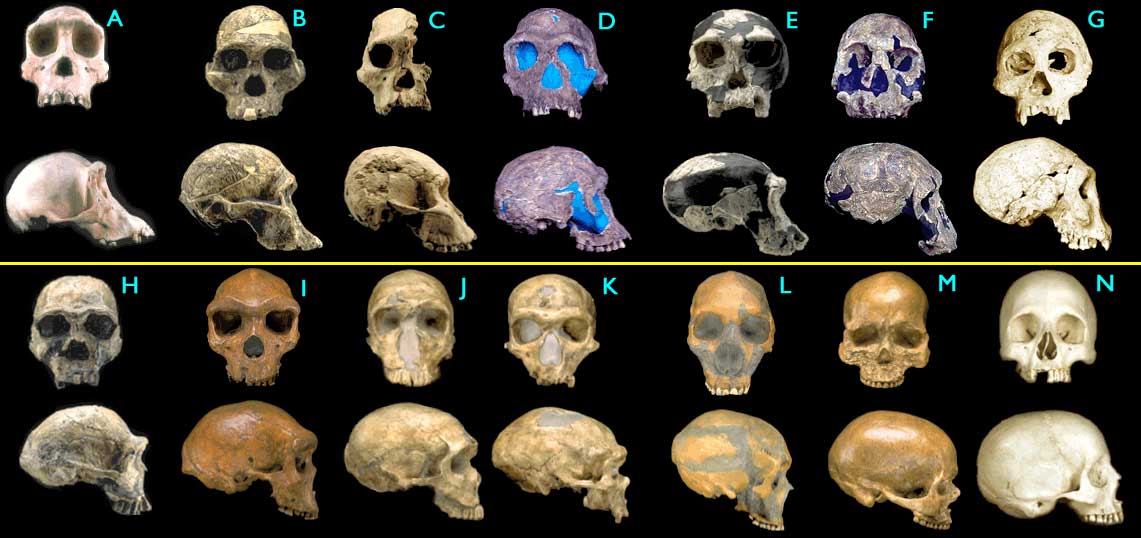
Anyway back to my point, transitional fossils. This is one of my favourite photos:


Skull A is that of a modern day chimpanzee, the closest living relative to humans, which are represented by Skull N (Edit: For those who claim there is no proof of the relationship between humans and chimps, see here - prepare to be pwned). Since evolutionary theory predicts that humans and chimps share a common ancestor, there necessarily must have been hominid-like organisms in the past with intermediate morphologies between the two modern day species. Now look at all the other skulls. Pretty convincing evidence if you ask me. Here is a list of the species for each skull and the given dates for their ages:

(A) Pan troglodytes, chimpanzee, modern
(B) Australopithecus africanus, STS 5, 2.6 My
(C) Australopithecus africanus, STS 71, 2.5 My
(D) Homo habilis, KNM-ER 1813, 1.9 My
(E) Homo habilis, OH24, 1.8 My
(F) Homo rudolfensis, KNM-ER 1470, 1.8 My
(G) Homo erectus, Dmanisi cranium D2700, 1.75 My
(H) Homo ergaster (early H. erectus), KNM-ER 3733, 1.75 My
(I) Homo heidelbergensis, "Rhodesia man," 300,000 - 125,000 y
(J) Homo sapiens neanderthalensis, La Ferrassie 1, 70,000 y
(K) Homo sapiens neanderthalensis, La Chappelle-aux-Saints, 60,000 y
(L) Homo sapiens neanderthalensis, Le Moustier, 45,000 y
(M) Homo sapiens sapiens, Cro-Magnon I, 30,000 y
(N) Homo sapiens sapiens, modern

Now the photo is slightly misleading in that it suggests a steady progression from chimps to humans. This is not how evolution happened. The chimp and human lineages split about 5-7 million years ago and so predate the above photo. The chimp skull is just there for reference. The comparisons should really be studied from B-N, that is from Australopithecus to humans. A similar diagram could be made tracking the evolution to the modern day chimp, but the differences may be less obvious. In fact, at a glance, the modern chimp skull is actually quite similar to Australopithecus (although there are many differences, look at the eye sockets).

Another thing to point out is that these particular skulls may not have belonged to individuals that were direct ancestors of modern humans, they may well have been on other branches on the hominid evolutionary tree (see picture below). This is not really a problem though, as it is simply like comparing similarities between aunts, uncles and cousins, instead of directly comparing parents and offspring. The point being that comparisons can still be informative and a range of transitional features from modern day chimps to modern day humans is evident, indicative of common ancestry. Of course, the fact still remains that many of the species above could have belonged to populations that were direct ancestors of modern day humans.


Hominid evolution (including Kent Hovind, proponent of the 'no transitional fossil' argument)

Tracking the changes in the skull between Australopithecus and humans, we can notice gradual changes which would be considered transitional. Notice how the palate (roof of the mouth) retracts over time, indicating that less strength was needed to chew food. Although not visible on the above photo, the lower jawlines of these early hominid skulls are even more pronounced and follow a similar pattern of change.

This is most likely a direct result of the use of fire, as cooked food is much easier to breakdown and chew than raw meat and plants. It is thought that Homo habilis invented the use of fire for cooking, and accordingly it is the Homo habilis skull (Skull E) which first shows a reduced size in the palate.

Also, notice how the brain size increases massively in a steady progression from Australopithecus to humans. One hypothesis actually links these two morphological changes. Is is thought that a mutation in a protein called MYH16, a chief component of the powerful jaw muscles, resulted in a reduction in the size of the chewing apparatus. This may have reduced the physical restraints on the rest of the skull, allowing it to grow and accommodate the increasing size of the brain.

All fascinating stuff!

Now how on earth can a creationist look at these skulls and claim that there are no transitional fossils? Well some claim that this is just evidence of 'variation within kinds' or that transitional fossils must be direct ancestors and not from other branches. These claims are weak. Firstly, if it only represents 'variation within kinds' then these creationists are still conceding that chimps and humans are the same 'kind', in direct contradiction to their faith. Secondly, no evolutionist claims that transitional fossils must be from direct ancestors, merely that they show transition between the morphology of a particular feature in two distinct specimens. These changes show that features have evolved in populations over time. It is not necessary to show the change in these features in a direct ancestral line.

Look at it like this...

Imagine you were trying to find and catalogue a photo of each of your direct male relatives, father, grandfather, great-grandfather, etc, in order to compare a particular feature, say nose size. You have photos that span 10 generations (unlikely, but humour me) but you are missing one photo, lets say the 7th generation. As luck would have it, you do have a photo of the brother of your missing direct male relative. Of course you would prefer to have the actual direct relative, but in the absence of this photo, the photo of the brother can still act as a good substitute. It is likely that the brother had similar features to your direct relative and so his nose size is still informative. In fact you could look at photos of siblings for a few of the generations and not really lose any informational power. This is why transitional fossils, or features, do not need to come from a direct ancestor.

Anyway, the demands of creationists in this respect are ludicrous. Even if there were fossils in a direct ancestral line in front of them, they would simply say that there still isn't enough evidence. They would ask for the fossils that show transition from each specimen to the next (i.e. imagine a photo with twice as many skulls). If you could provide them, they would ask for the next set of intermediate fossils, and again, and again...

More fossils to a creationist doesn't mean more evidence, it means more gaps! It seems like the only way to satisfy them would be to produce fossils from every organism that has ever lived on this planet.

Meh.

------------------------------------------------------------------

Edit: Below is the chart showing that although creationists are adamant that none of these are transitional and all are either apes or humans, they are not able to agree on which are which.

Evolutionists also disagree on how fossils should be classified, which species they belong to, etc. True enough. But according to evolutionary thinking, these fossils come from a number of closely related species intermediate between apes and humans. If this is so, we would expect to find that some of them are hard to classify, and we do. Creationists, on the other hand, assert that apes and humans are separated by a wide gap. If this is true, deciding on which side of that gap individual fossils lie should be trivially easy. Clearly, that is not the case.


Uploaded with ImageShack.us

Hat tip to BathTub

Read More...