Showing posts with label Nature. Show all posts

13 March, 2012

Venus and Jupiter FTW!

I just took these photos of Venus and Jupiter from my apartment window. I couldn't believe how clear the sky was given that I live close to the centre of Dublin. Venus is slightly higher and on the right hand side. They will be this close for a few more days and then not again until June 2015.

Amazing.


See here for more on the meeting of the two planets.

And here is one I annotated (click to enlarge):

Read More...

14 December, 2011

Higgs looking like-lier

In complete disagreement with my last post, it turns out that scientists at CERN might have actually found the Higgs boson. Separate experiments have independently confirmed the existence of something 'Higgs-like' at about 124-126 GeV:

Gianotti and Tonelli led two separate teams – one using Cern's Atlas detector, the other using the laboratory's Compact Muon Solenoid. At their seminar yesterday one team reported a 2.3 sigma bump in their data that could be a Higgs boson weighing 126GeV, while the other reported a 1.9 sigma Higgs signal at a mass of around 124GeV. There is a 1% chance that the Atlas result could be due to a random fluctuation in the data.

Read More...

25 November, 2011

Higgs looking unlikely

The search for the Higgs boson has apparently entered the 'endgame'. As I mentioned a few months ago, the mass/energy ranges in which Higgs was expected to be found have all but been ruled out. Since then, as this article in the latest edition of Nature explains, the searches in lower and higher mass ranges have been unsuccessful. The last remaining possibility is that the Higgs is lurking somehwere between 114–141 GeV.


Data from this range has been collected and is currently being analysed:

The answer to the Higgs question lies in the data now being crunched at CERN and other academic-computing centres around the world. The first 70 trillion or so collisions turned up intriguing Higgs-like decays in the ATLAS and CMS experiments, hinting at a particle of around 140 GeV (see Nature 475, 434; 2011). But the second batch of collisions showed nothing. If the collisions now being analysed show further evidence of Higgs decays, then the teams on the two experiments are likely to announce that they have found a tentative signal, to be firmed up in 2012. If not, the search will probably continue until the LHC is shut down for an upgrade at the end of next year.

Of interest, several prominent physicists were asked for their opinion as to whether Higgs will be found. Opinions differed (click image for larger and clearer version):

Read More...

28 July, 2011

The end of SETI - as we know it

That's right. According to the latest edition of Nature, Californian budget restraints mean that the Search for Extraterrestrial Intelligence (SETI) is to come to an end.

If further funding is not secured, this means that all 42 radio dishes of the Allen Telescope Array in Hat Creek Radio Observatory will be shut down and possibly dismantled.


The melancholy vista at Hat Creek makes it easy to entertain equally melancholy thoughts about the SETI enterprise itself. It's the ultimate in high-risk, high-payoff science, pursued by only a handful of passionate researchers. In 50 years of searching, they have turned up nothing — and they can't quite shake an association in the public mind with flying-saucer sightings and Hollywood science fiction, all of which is so easy for cost-cutting politicians to ridicule that any substantial federal funding for SETI is impossible. Private support for the search is getting tighter because of the global recession. And many of the pioneers who have championed the search are now well into their 60s, 70s or 80s.

It's a sad thought that SETI might soon be gone, because althought they have been scanning the skies - without success - for 50 years, they have literally just begun. As Jill Tarter, head of the search programme at the SETI Institute in Mountain View, puts it:

...giving up now would be like dipping a cup into the Pacific Ocean, finding nothing but clear water and declaring, 'the oceans have no fish'

So what next?

According to the article, although SETI itself might officially be shut down, the search for extraterrestrial life will go on regardless. A website called SETIstars.org has been set up to try and raise some basic operational money - this seems unlikely to succeed though given the current worldwide economic pressures. A more plausible approach that is being considered is to simply cut back and do smaller scale studies with the help of SETI enthusiasts around the world who might have access to the appropriate equipment - sort of a SETI equivalent of the Great Internet Mersenne Prime Search (GIMPs).

Either way, I think it's inevitable, and important, that the search will go on - albeit in a different way.

Read More...

22 July, 2011

The good, the bad and the ugly of Lyme disease treatment

Treating human disease is difficult for a number of reasons, not least the fact that patients have preconceptions about what treatments they want to receive. If a doctor prescribes a certain medication, and the patient - in full knowledge of the facts - decides not to take it, then there is not much more that the doctor can do. A case in point is highlighted in the March 2011 edition of Nature Reviews Rheumatology, specifically in a Case Study article entitled: "A case revealing the natural history of untreated Lyme disease".

In this article, a rheumatologist named Robert T. Schoen recounts the story of a patient he had who was determined to use a combination of acupuncture and homeopathy to cure her Lyme disease, a condition brought about by a bite from a tick of the Borrelia genus. Although the alternative treatments occasionally gave her some relief from her symptoms (the placebo effect - alive and strong), her Lyme disease, and painful arthritic episodes, kept coming back.

But still, she refused to take antibiotics:

The rheumatologist confirmed the diagnosis of Lyme arthritis and prescribed amoxicillin (500 mg, three times daily for 28 days) to hasten the resolution of the current episode of arthritis and to prevent subsequent flare-ups. The patient initially agreed to take this treatment and to return at the completion of antibiotic therapy. When seen a month later, however, she had not taken any of the prescribed antibiotic therapy.

Medically speaking, this was obviously not an ideal situation for the patient. However, through her refusal to accept the convential Lyme disease treatment, the disease was able to progress naturally over a period of almost 4 years - Lyme disease is usually treated successfully with antibiotics. This situation gave the doctors a unique opportunity to study how the disease progresses and, ultimately, determine how effective the conventional treatments are following such a long disease period.

Below is a timeline for the four years (click to enlarge). Symptoms are displayed above the timeline. The visits to the homeopath, acupuncturist and rheumatologist are color-coded and displayed below the timeline.


Notice how even the homeopath eventually admitted defeat and prescribed antibiotics for the patient - and she still didn't take them!

Eventually, after four years of failed alterntive treatments, the patient was in so much pain that she had confined herself to bed for a month. She relunctantly visited and listened to the advice of a rheumatologist and took a 30-day course of doxycycline. Six months later, she had no further arthritis and remained well.

Schoen concludes:

...patients who are not treated with antibiotic therapy are known to have recurrent episodes of oligoarthritis, often affecting the knee. Indeed, this Case Study demonstrates that Lyme arthritis, if untreated, continues to occur in a well-characterized pattern that can last for years. Furthermore, the arthritis in this patient is thought to have resulted from B. burgdorferi infection (in the absence of previous antibiotic therapy) rather than a postinfectious inflammatory process, and her condition was cured with a relatively short course of antibiotic treatment. The clinical identification of this increasingly uncommon long-term form of Lyme arthritis is important and appropriate management, even at this late-stage of disease, can result in gratifying treatment outcomes.

This case shows two things quite clearly:

1 - Even after four years of allowing Lyme disease to progress naturally, the patient was still successfully treated with antibiotics (the good)


2 - Acupuncture (the bad) and homeopathy (the ugly) are not effective at treating Lyme disease

The first point above bodes well for Lyme disease patients; conventional medicine can still be effective, even years after contracting the disease.

The second point simply serves as a warning to those who seek out unproven remedies for serious illnesses - do so at your own peril.

Read More...

21 April, 2011

PhD - what's the point?

The latest issue of Nature has a few articles on the topic of PhDs.

'Reform the PhD system or close it down'
by Mark C. Taylor argues that many universities and academics essentially (if not purposefully) lie to undergraduates about their eventual career prospects in order to simply get 'free labour'. In this way, PhD students become nothing more than data generators who can be discarded and forgotten once they successfully graduate. I've seen this happen in my own career. Some academics have little interest in their students, other than what they can get out of them for their own benefit, i.e. publications. But their are others who do care. They allow the student to develop in their own time, which can take months or even years, but once that spark emerges they carefully nurture the student and encourage them to think laterally and critically about their chosen subject area.

As a side note, I am somewhat surprised that Nature invited Mark C. Taylor to write this article, given that he is a Professor of Religion in Columbia University. Don't get me wrong, I have no problem with people studying religion. But I think someone from a scientific discipline would have been more suitable. Indeed, the author even states the following:

[Universities] must design curricula that focus on solving practical problems, such as providing clean water to a growing population.

As noted by several of the commenters, how can a religion cirriculum achieve that? If it can't address practical problems, then lets get rid of religion PhDs.

---

The second article ('Seven ages of the PhD') is by a number of authors, each of whom completed their PhD in a different decade: Raymond Gosling 1950s, Cheryll Tickle 1960s, Steve W. Running 1970s, Yao Tandong 1980s, Andras Dinnyes 1990s, A. A. Osowole 2000s, & Erika Cule who is due to complete her PhD in 2012. Each of the authors gives a brief synopsis of their experiences during these years and compares to the current PhD climate.

Particularly interesting is the section by Raymond Gosling, who worked with Maurice Wilkins and later Rosalind Franklin at King's College London and is credited with taking the infamous first picture of the stucture of DNA.

Gosling says:
Randall's biophysics unit was a wonderfully energetic place to work. However, in those days relationships between staff and students were rather formal. All the men wore ties with their white lab coats, and the senior common room at King's was for men only...He told me that he didn't want to see my PhD until it was submitted — I can't imagine that happening nowadays.

Other notable quotes include:

Tickle (1960s):
Nowadays, PhDs are much more structured. Students are not given as free a rein as I was, nor are they allowed to make as many mistakes. There is a greater emphasis on acquiring data. Students also often work with others rather than alone. These differences reflect the changes over the past 40 years in the way in which research is carried out, and its growing pressures.

Running (1970s):
I finished my PhD in 1979, just before personal computers arrived. So it was written on a typewriter, with 53 hand-drawn figures. The subject of this labour of love was inducing water stress on 13 pine trees by cutting their leaves off and measuring desiccation responses. Looking back now, my PhD research seems highly esoteric. The work built fundamental understanding of leaf-scale physiology but had no policy relevance. The only practical value was in understanding why your Christmas tree turns brown. I think how innocent we all were then, doing weird science and looking for cheap beer.

Tandong (1980s):
I graduated from Lanzhou University in China's Gansu Province in 1978. At that time, the postgraduate system in China was immature. During the Cultural Revolution (1966–76), the whole education system was broken, and it was only after 1978 that the degree system was restored. There were probably only a few hundred PhD students in China.

Erika Cule (2010s):
The first draft of the human genome was published when I was still at school.

---

The next three articles comment on an increasingly problematic situation - the bottle neck that has emerged from a large number of PhD graduates and a relatively low number of academic positions. Alison Cook ('Education: Rethinking PhDs') recommends thinking outside the box, as opposed to just staying on the established treadmill of Degree-PhD-Postdoc-Academic position.

Here, Nature presents five approaches to shaking up the hallowed foundations of academia. They range from throwing scientists deep into independent study, to going interdisciplinary, to forgoing the PhD altogether.

1 Jump in at the deep end
2 Forget academia
3 Trample the boundaries
4 Get it online
5 Skip the PhD

All good options, but it ultimately depends on the person.

---

The fourth article, ('Education: The PhD factory') discusses PhDs on a country-by-country basis - some in which prospects for PhD graduates are on the way up, some on the way down, and some which are stagnating.

Japan, for example...

In some countries, including the United States and Japan, people who have trained at great length and expense to be researchers confront a dwindling number of academic jobs, and an industrial sector unable to take up the slack. Supply has outstripped demand and, although few PhD holders end up unemployed, it is not clear that spending years securing this high-level qualification is worth it for a job as, for example, a high-school teacher...

Of all the countries in which to graduate with a science PhD, Japan is arguably one of the worst. In the 1990s, the government set a policy to triple the number of postdocs to 10,000, and stepped up PhD recruitment to meet that goal. The policy was meant to bring Japan's science capacity up to match that of the West — but is now much criticized because, although it quickly succeeded, it gave little thought to where all those postdocs were going to end up.

Overall, the statistics seem to show that the benefits of doing a PhD are dwindling:


---

So...

PhD - what's the point?

The final article ('What is a PhD really worth?') by Peter Fiske sums up the whole situation for me:

...I believe the most important lesson is that no programme of higher education can guarantee its graduates gainful and lucrative employment. At best, a graduate programme in any discipline can provide its students with key skills, knowledge and abilities. How the graduates apply that learning is up to them.

I agree with this. For me, achieving the ability to think critically and laterally is the point to doing a PhD (whatever the discipline). It is just as important as the eventual career path. The ability to critically assess any given topic or situation is advantageous in any walk of life and is something that employers will recognise and actively seek out. A good PhD program will provide the environment for students to learn these skills, regardless of whether they gain direct employment from such a program.

At the end of the day, a PhD is a very personal thing. No-one should go into one lightly, but no-one should be afraid to pursue a PhD based on downstream career prospects. My philosophy has always been to try and work in a field that I am interested in. I have been lucky enough to live up to that so far, and part of that was gaining a PhD in molecular immunology. I would change things here and there if I could, sure; but I have no major regrets.

Read More...

11 April, 2011

Law of Non-Contradiction

I don't necessarily take the position that the Law of Non-Contradiction doesn't hold, but I also don't necessarily accept a common refutation of this position, which involves reductio ad absurdum. That is, when someone says "if the Law of Non-Contradiction doesn't hold, then it does hold, doesn't it?". The reason I don't accept this is two fold:

1) The refutation takes the form of reductio ad absurdum and attempts to use proof by contradiction. Essentially, the contradiction that is presented is that you are both right and wrong at the same time, meaning the argument is reduced to absurdity. However, the emergence of a contradiction does not refute the position that the Law of Non-Contradiction doesn't hold, because the very nature of this position allows for contradictions.


2) In applying proof by contradiction, the refutation already accepts that the law of non-contradiction holds in order to show that it holds. Thus, the argument is circular and so doesn't refute the original position.


I have blogged about this subject before, and am currently in the middle of a conversation about it with John Fraser (JF) on the Premier forums, which I present below the fold. It started by JF sharing this anecdote about his philosophy professor:

JF: My seminary philosophy professor (a student of Plantinga's) had a standard response when some smart-alec in the back would try to dispute the law of non-contradiction (usually with some kind of half-baked appeal to quantum theory like what you guys are doing). He would say, "well, then I'm right, aren't I?" How can you contradict that (having already denied the law of non-contradiction)?

.
.
.

Rhiggs (RH): Perhaps I'm missing something, but can someone please explain why a legitimate answer to John Fraser's oft mentioned philosophy professor can't simply be...

"Well, then you're wrong, aren't you?"

...seeing as the professor, in order to give his response, has accepted the student's proposition that the law of non-contradiction doesn't hold? That is, under the terms that the law doesn't hold, if he's wrong he's actually right (as he states). but it also means that if he's right he's actually wrong. As I see it, the back and forth could go on like this ad infinitum, without actually affiriming either position.

.
.
.

JF: Earth to Rhiggs: the point of the statement is to show that BY THE STUDENT'S OWN STANDARDS he has no way to object that the professor is wrong. Get it? It's not an admission by the professor that the law of non-contradiction doesn't hold!

This is a form of reductio ad absurdum. In a reductio argument, the one making the reductio does not have to accept the conclusion of the argument he is trying to refute - rather, he shows that it leads to an absurdity.

.
.
.

RH: I know that he is not admitting that the law of non-contradiction fails, but in order to show that the student's argument leads to absurdity, he has to show what happens when the law fails. In order to do this, his argument relies on adopting the student's position.

That is, he is really saying, "well, if the law of non-contradiction doesn't hold, then I'm right, aren't I?". But the student can just turn this back on the professor and say "well, if the law of non-contradiction doesn't hold, a position you needed to adopt in order to make your point, then you're wrong, aren't you?". The point being that the professor's argument itself is also reduced to absurdity. I'm not saying the student is correct in the first place, but that the professor's response isn't sufficient to refute it.

In addition, the professor is simply showing that if the law of non-contradiction doesn't hold, then it leads to contradictions, and thus absurdity. But of course it does - that is the very claim! By using the emergence of contradictions, the professor is using the law of non-contradiction to show that the law of non-contradiction holds, which seems circular.

.
.
.

JF: Rhiggs,

That is, he is really saying, "well, if the law of non-contradiction doesn't hold, then I'm right, aren't I?". But the student can just turn this back on the professor and say "well, if the law of non-contradiction doesn't hold, a position you needed to adopt in order to make your point, then you're wrong, aren't you?".

Well, he could say those words perhaps. The problem is, in saying this he's saying that the professor is NOT right, but he's already denied the law of non-contradiction. But in saying, "then you're wrong, aren't you?" he would be AFFIRMING the law of non-contradiction - unless he wants to say that the professor is both right and not right about the same point. So actually this would be playing exactly into the trap which the professor has set for him. He can't deny the professor's claim to be right, he could only add another claim, namely that he is not right. And then he can try to affirm that those two propositions are perfectly compatible. But that would be sheer nonsense as even the befuddled student would hopefully be forced to realize.

In addition, the professor is simply showing that if the law of non-contradiction doesn't hold, then it leads to contradictions, and thus absurdity. But of course it does - that is the very claim! By using the emergence of contradictions, the professor is using the law of non-contradiction to show that the law of non-contradiction holds, which seems circular.

The problem is much deeper than that. It means the law of non-contradiction is necessary even for the student to make any claims about the law of non-contradiction. Note that I'm not saying that this proves the existence of God (a'la presuppositionalism) - just that in denying the law of non-contradiction, you are essentially denying the ability to deny anything. And yes, that is absurd. You might as well say, "I deny the truth claim that says that a truth claim can be denied." It's as self-referentially incoherent as saying that there are no absolute truth - which is itself an absolute truth claim!

.
.
.

RH: Let me be clear here. I'm not agreeing with the student, I'm just disagreeing with the professor's refutation.

But in saying, "then you're wrong, aren't you?" he would be AFFIRMING the law of non-contradiction ...

I don't see how this is so in two different ways. If he says the professor is wrong, then he is denying the law, not affirming it, as the professor's position is that the law holds. Also, he is denying the law by the very act of claiming that the professor's position is both right and wrong at the same time.

...unless he wants to say that the professor is both right and not right about the same point

Which is exactly the point. The student could say this if the law of non-contradiction doesn't hold. He could say the same about any statement, even his own. The professor might claim that this reduces the student's argument to absurdity, but in doing so he is relying on proof by contradiction, i.e. it is absurd because you can't be both right and wrong.

This fails for two reasons:

1) Showing the emergence of a contradiction does not refute the student's position, as this is his position, that contradictions are allowed.

2) In applying proof by contradiction, the professor is already accepting that the law of non-contradiction holds in order to show that it holds. His argument is circular and so doesn't refute the student's position.

just that in denying the law of non-contradiction, you are essentially denying the ability to deny anything. And yes, that is absurd.

As I see it, by denying the law of non-contradiction, you are actually allowing for any particular thing to be both denied and affirmed at the same time, not just denied. I agree that it is absurd - in that it is of no apparent practical use to humans - but it is not refuted using the professor's method due to the reasons presented above.

Interesting topic.

.
.
.

JF: Rhiggs,

I don't think you get the point of the refutation. Sure, the student could take the position, "you're both right AND wrong, as am I, because I don't believe the law of non-contradiction holds," but then even as he says this, he is implicitly affirming that the law of non-contradiction DOES hold - otherwise he would not be able to say the law of non-contradiction DOESN'T hold. Get it?

So actually his statement would have to be modified to, "you're right and wrong just as I am right and wrong because the law of non-contradiction both does and does not hold." But hopefully the light will come on at some point and the student will realize that this is all just sheer nonsensical gibberish with no content or truth value whatsoever.

.
.
.

RH:

I don't think you get the point of the refutation.

I'm not trying to be difficult here, but you're right, I don't get it. By the student's standards, if the law doesn't hold, anything that anyone says can mean what they say and the opposite all at once. It's absurd! But I still don't see how it has been refuted. The professor is simply applying the law to refute the denial of the law, and that is just circular.

Sure, the student could take the position, "you're both right AND wrong, as am I, because I don't believe the law of non-contradiction holds," but then even as he says this, he is implicitly affirming that the law of non-contradiction DOES hold - otherwise he would not be able to say the law of non-contradiction DOESN'T hold. Get it?

No. Why does the student, by his own standards, need to implicitly affirm the law in order to deny it?

So actually his statement would have to be modified to, "you're right and wrong just as I am right and wrong because the law of non-contradiction both does and does not hold." But hopefully the light will come on at some point and the student will realize that this is all just sheer nonsensical gibberish with no content or truth value whatsoever.

You say that the student's position is gibberish because of the multiple contradictions that arise, but that still doesn't actually refute the student's position due to my points above about why the professor's refutation is flawed.

Firstly,
- The student's position is that contradictions are allowed
- The professor's refutation is that the student's position leads to a contradiction (you can't be both right and wrong at the same time)
- But this fails, because the student's position is that contradictions are allowed (if the student is right, then he most certainly can be both right and wrong at the same time)

Secondly,
- The student's position is that contradictions are allowed
- The professor's refutation relies on proof by contradiction (reductio ad absurdum), which requires the law of non-contradiction to hold
- Thus, the professor is assuming that the law holds in order to show that the law holds
- The professor's argument is circular and, therefore, is not sufficient to refute the student (pointing out a logical fallacy with the use of another logical fallacy isn't very impressive)

If you can address these two points then I might be convinced.

.
.
.

JF: Rhiggs,

If you can address these two points then I might be convinced.

You're really making me earn my paycheck on this one. Oh, wait, I do this for free. It just feels like a job sometimes.

You want me to address these "two" points - with 3 and 4 subpoints, respectively?

Probably this won't work after everything else I've already said, but basically the problem is this. You keep considering the whole thing from the standpoint that the student's position is that contradictions are allowed. Right? The problem is, as the professor shows, the student's position also leads to the conclusion that contradictions are NOT allowed. So are contradictions allowed or aren't they? You can't just say, "well, that's a contradiction but it doesn't matter because contradictions are allowed," because by his own position contradictions are NOT allowed. You have to apply the rule at the meta-level, not just the sub-level. In other words, you can't just apply the student's rule to everything below the level of the rule itself, because it also has to apply to the rule.

The point of all of this, hopefully, is that the student will see his position leads to a situation which even he doesn't find desirable. That his position amounts to nothing more than meaningless word games and makes it impossible to talk about anything coherently. He could, I suppose, just say, "why talk about anything coherently?" The problem, though, is that in saying that the law of non-contradiction does not obtain, he presumably takes himself to be saying something coherent. If he isn't, then who cares?

.
.
.

RH: As I suspected, you are still simply saying that a contradiction disproves the position that contradictions are allowed. This would be a perfectly acceptable way of disproving most positions, but not this particular one due to the very nature of what is being claimed. Put simply, proof by contradiction cannot be used to prove the law of non-contradiction, or to disprove its negation. In doing so, you are saying nothing more than it's wrong because it's wrong.


So are contradictions allowed or aren't they?

This is where you are going wrong. You can't just decide the answer to this and then subsequently apply it to the problem, because this is the very thing that is being debated. Your approach is completely circular.


You have to apply the rule at the meta-level, not just the sub-level. In other words, you can't just apply the student's rule to everything below the level of the rule itself, because it also has to apply to the rule.

That is exactly what I am doing. I am applying the position that 'contradictions are allowed' to every level in this. If the rule holds, then it both holds and doesn't hold, so any apparent disproof is not a disproof at all, because the position implies that the rule both holds and doesn't hold at the same time, and of course it also doesn't imply that! Call the position nonsense or gibberish or meaningless word games if you like, but that is irrelevant to the legitimacy of the refutation, which I still contend is flawed.

.
.
.


Read More...

15 December, 2010

Going through the gears

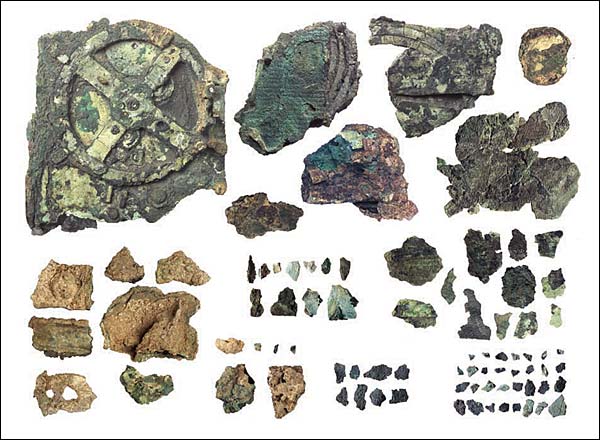
The Antikythera mechanism is the world's oldest known computer (150–100 BC). Various parts of this intricate cog-based instrument were discovered in a shipwreck back in 1900-1901, although the purpose of it, to accurately predict astronomical positions, was not determined until many decades later.


From a recent article in Nature:

Two thousand years ago, a Greek mechanic set out to build a machine that would model the workings of the known Universe. The result was a complex clockwork mechanism that displayed the motions of the Sun, Moon and planets on precisely marked dials. By turning a handle, the creator could watch his tiny celestial bodies trace their undulating paths through the sky.

The mechanic's name is now lost. But his machine, dubbed the Antikythera mechanism, is by far the most technologically sophisticated artefact that survives from antiquity. Since a reconstruction of the device hit the headlines in 2006, it has revolutionized ideas about the technology of the ancient world, and has captured the public imagination as the apparent pinnacle of Greek scientific achievement.


Now, some clever big kids have reconstructed it...

With freakin' LEGO!!


Read More...

02 November, 2010

Richard Feynman is awesome

I can't believe I've never seen this interview until now. I recommend that anyone with even a passing interest in science (mainly physics and a bit of chemistry and biology) should watch it. It's basically everything you wanted to know about in school, but they never taught.


Heat:


Fire:


Rubber bands:


Magnets:


Electricity:


Mirrors:


Trains:


Waves:


Stars:


Stars 2:


Thinking:


Thinking 2:


Read More...

13 March, 2010

AIDS vaccine: progress in the face of ignorance

I think most would agree that there are a lot of ignorant people in the world. Luckily, most of these individuals aren't a threat to the general public, just to themselves. But unfortunately, some are. Among the most dangerous are those who crusade on behalf of the anti-vaccine groups. They are quite literally encouraging the spread of disease (and sometimes death) by discouraging the use of vaccines.

The poster child for this movement is Jenny McCarthy (you know, the girl who gets paid to take her clothes off) who, despite a complete lack of scientific and medical training, reckons she is well-placed to comment on and dissuade the use of the MMR vaccine. Together with her supporters, including her husband Jim Carrey (you know, the guy who gets paid to make funny faces), she insists that this medically-validated vaccine causes autism.

It doesn't.

In fact, the original research that apparently 'proved' this has recently been retracted by the Lancet, and the author who was largely responsible for the unethical behaviour has been widely discredited. The fact is, the MMR vaccine saves lives, and so by influencing parents to forego this important step in a child's health results in deaths (and many more illnesses).


McCarthy and co are actively causing death and disease. A website called www.jennymccarthybodycount.com is keeping tabs on this. At the time of writing the numbers were:

Number of preventable illnesses: 54,907
Number of preventable deaths: 501
Number of autism diagnoses scientifically linked to vaccination: 0


Anyway, this post wasn't meant to be about McCarthy or autism. Instead, I want to discuss a recent publication in Nature by Herbert W. Virgin and Bruce D. Walker, which discusses efforts to develop a HIV vaccine.

Here's the abstract:

"Developing a human immunodeficiency virus (HIV) vaccine is critical to end the global acquired immunodeficiency syndrome (AIDS) epidemic, but many question whether this goal is achievable. Natural immunity is not protective, and despite immunogenicity of HIV vaccine candidates, human trials have exclusively yielded disappointing results. Nevertheless, there is an indication that success may be possible, but this will be dependent on understanding the antiviral immune response in unprecedented depth to identify and engineer the types of immunity required. Here we outline fundamental immunological questions that need to be answered to develop a protective HIV vaccine, and the immediate need to harness a much broader scientific community to achieve this goal."

The authors first remind the readers of the scale of the problem; in some regions, HIV infection rates in young women can increase from 1% at the age of 15 to over 50% by their early 20s - an incredible difference within a few years.

Here is the problem.... Vaccines work by stimulating the natural immune response.

This is usually an effective method as the body is somewhat adept at clearing vaccines. The main setback in developing a HIV vaccine is that the natural immune response isn't very effective against HIV and, accordingly, attempts to promote a vaccine-induced response to HIV have been equally as ineffective. Despite this alarming obstacle, the authors remain confident that a vaccine can and will be developed, although they admit that whether this vaccine will prevent infection, or instead prevent disease progression, is hard to predict. They mostly base this on studies in monkeys infected with simian immunodeficiency virus (SIV), which is very similar to HIV and indeed, is thought to be a candidate for its origins.

However, the fact that not all HIV infection lead to AIDS is encouraging, because this means that natural immunity capable of preventing disease progression does exist. Some individuals can harbour HIV for 30 years, and live relatively normal lives without developing AIDS. It is the, as yet unidentified, immune factors behind this remarkable resistance that must be harnessed in order to develop a robust HIV vaccine.


The authors go on to discuss different potential strategies, including eliciting both T cell and B cell responses. Another interesting aspect of current HIV vaccine research is the area of vaccine evolution, as HIV sequences have tremendous diversity and mutation rates. This 'strength' of HIV can also be exploited as a 'weakness', because if we can better understand the constraints on HIV evolution, we can potentially force the virus down a particular evolutionary pathway, and thus back it into a corner - a corner in which we have the upper-hand. This 'evolutionary trap' vaccine is an exciting idea.

A final observation the authors make is that it is difficult for scientists outside the HIV field to get involved in HIV/AIDS-related research. Funding issues discourage many researchers from straying from their own areas of expertise. This causes a bottleneck to emerge, where it becomes progressively more difficult for 'fresh' labs to break into this area.

The authors conclude "We must finally apply the full power of modern science to the AIDS vaccine efforts, and by defining the knowable unknowns translate this knowledge to vaccine-mediated protection against a pathogen that has already caused over 30 million deaths and shows no sign of relenting."

Of course, if and when a HIV vaccine is developed, are we likely to encounter the same type of resistance espoused by McCarthy and her type towards the MMR vaccine?

Inevitably, the answer is yes.

Individuals are transient in the long-term, but ignorance is permanent.

Read More...

23 December, 2009

Evolution of the Immune System

One of the major arguments of Michael Behe in the Dover trial, in which intelligent design creationism was shown up to be the vacuous nonsense that it is, was that the immune system is too complex to have evolved through purely natural processes. I think its reasonable to assume that for someone to make such a wide, sweeping claim they must be up to date with the literature...

Not Behe.

In fact, when presented with a stack of thick textbooks, all of which included chapters on the evolution of the immune system, Behe had to admit that he hadn't read any of them. Not one!

Let's just say that his honour, Judge Jones, was not amused. And, of course, the rest is history.

Well in the January edition of Nature Reviews Immunology, there is an interesting commentary on the very subject that Behe knows nothing about, and yet feels qualified enough to dismiss - evolution of the immune system.

How did our complex immune system evolve?

Max Cooper and Brantley Herrin discuss the evolution of innate and alternative adaptive immune systems for defence purposes and conclude that successful vaccines and other therapeutic manipulations of the immune system will require a composite strategy.

The immune system basically consists of two arms, innate and adaptive immunity (although, as ever, this is an oversimplified account).

Innate immunity works tirelessly to keep you free from infection every second of every day. If you need any evidence of this, think of how quickly an unrefridgerated body can decompose following death. And innate immunity isn't picky; it will protect you against anything it recognises as foreign. If you've heard of interluekin, interferon, TNF, macrophages, neutrophils, Toll-like receptors or complement, you've heard of innate immunity.

In comparison, the adaptive immune system is only called upon when innate immunity fails to eliminate a microscopic invader. But let me tell you, that little bug is in for a whole lot of trouble, because the adaptive immune system will target it specifically and mount a massive immune response to attack it. If innate immunity is like low level police constantly patrolling the streets, adaptive immunity is more like an elite squad of detectives and sharpshooters out to get their man. Common players in adaptive immunity include T cells, B cells and antibodies.

However, the benefits of adaptive immunity are only enjoyed by higher eukaryotes, including me, you and anything with a backbone. Organisms 'below' this in the evolutionary tree make do with innate immunity alone - indicative of the power and efficiency of the innate immune system. We share many innate immune components with mice, chickens, fish, fruit flies and even plants (in fact, in the same issue of Nature Reviews Immunology there is a whole review dedicated to a comparison of our innate immune system with that of the worm). And as one would expect if the immune system evolved, the closer we are to another species in the evolutionary tree, the more sequence similarity we find in the genes encoding these common proteins.

How does Behe explain this?... Well who knows, but my guess would be that he'd trolley out the usual creationist line that similar sequence could simply mean similar designer. Of course, the existence of endogenous retroviruses easily refutes this argument, but that is something for another day (but if you want to know more right now, click here).

As mentioned, the adaptive immune system is found exclusively in vertebrates. Cooper and Herrin discuss recent work that has cast new light on the evolution of adaptive immunity. It turns out that jawless vertebrates (hagfish and lamprey) have an adaptive immune system that functions slightly differently - in fact, the preliminary work on this was published in 2004, you know, before Dover. Specifically, hagfish and lamprey use entirely different types of antigen recognition receptor, meaning they use different proteins than we do to identify foreign pathogens. However, despite this difference, following recognition we all use similar mechanisms to direct our immune response to eliminate the invader.

Now the exact step-by-step evolutionary pathway that created these two different adaptive immune systems isn't known. Of course it isn't. It's completely unreasonable to expect that level of detail to be discovered, and Behe knows this. That's the reason he uses this type of argument - it's classic God-of-the-gaps drivel. However, based on current knowledge the authors sum up the probable evolutionary mechanisms involved:

The evolution of alternative adaptive immune systems was facilitated by two rounds of whole genome duplication, which enabled the original function of a gene to be maintained while allowing evolutionary selection of modifications of additional gene copies for new purposes. The common ancestor of lamprey and hagfish probably emerged between the first and second rounds of genome duplication, as amphioxus and tunicates have single gene copies, lamprey have two gene copies and jawed vertebrates typically have four copies of retained genes.

And of course, as usual with real science, this work leads to more questions:

Such convergent evolution of mechanisms for the generation of diverse antigen receptors after the split in jawless and jawed vertebrate ancestry raises the question of whether the two pathways of lymphocyte differentiation arose in a common vertebrate ancestor.

It's nice to know that people are working on this stuff, as opposed to others who try to stifle science with fanciful stories about mousetraps and magic.

Read More...

08 October, 2009

Saturn's New Ring

I don't have the words to do this justice, so all I'm gonna say is...

WOW!!!


(story here)

(original paper here)

Read More...

17 September, 2009

Interview with an Event Horizon

In the recent edition of Nature there is a rather odd interview. Not wanting to be outdone by Oprah and Ellen, they have gone for an extreme A-list guest. None other than...

...an Event Horizon!!

This should be interesting.

When asked about the origin of life, the Event Horizon answers:

Biological life as you know it originated in your universe 13½ billion years ago in the heart of heated comets. Heat and cosmic radiation bombarded the carbon dioxide, methanol and ammonia they carried. As they neared their star during their elliptical orbits, the comets' frozen cores thawed, allowing those chemicals to interact in a semi-liquid medium and form rudimentary organic compounds — proteins and amino acids, the building blocks of life. Streaking past the six worlds of this solar system, they rained down those organic compounds in dust that settled in the planet's atmosphere and, eventually, onto its surface. On those planets with a heat source and a liquid medium, these compounds formed lipid membranes that facilitated the formation of self-replicating cells. These evolved into bacteria that over eons developed into simple bio-organisms, the first step in the slow, inexorable climb towards complexity. This process has repeated itself countless times throughout the cosmos over billions of years. This is why your universe teems with biological life.

Non-biological life incubates in the cool ether of dark matter shaped by processes beyond your current level of understanding. However, if our experience is any indication, in time you will come to know such life forms and recognize them as your brothers. In every universe we've explored, biological and non-biological life forms inevitably join together and lift each other to magnificent new heights.


OK, sounds reasonable-ish.


But when asked if God exists, the Event Horizon has this to say:


Everything in existence has a creator, ad infinitum. Before the Big Bang there was neither time nor space nor matter, but consciousness. Formless. Eternal. Contemplating its creator. And contemplating others like itself that might exist across the infinite bubbles of reality. As time did not exist, we cannot say whether this omni-consciousness existed for a millisecond, a millennium or an eternity. But it jabbed with its thoughts at the weathered fabric between realities and poked an infinitesimal hole. And the entirety of a neighbouring universe — endless space and matter — flooded through that pinhole in a spectacular cosmic eruption. The omni-consciousness found that matter, gave it form, and it revelled in its multitudinous shapes. It discovered that matter — moulded by the flame of time and the winds of evolution — could eventually give rise to its own self-aware components, part of the omni-consciousness, yet separate from it. It delighted in each of the quadrillions of consciousnesses that flickered into and out of existence. It no longer knew loneliness. Time, space and matter continued to expand — prodded into acceleration by the omni-consciousness — hoping in vain to fill every crevice of infinity. This has happened in every bubble of the transreality-froth we've explored.


Hmmm, if you listen hard enough you can hear the gerbil at the Discovery Institute frothing at the mouth as he turns on his laptop...


Of course, this interview is just a bit of a joke.

The 'interviewer' is a chap named Mercurio Rivera, a science fiction writer. The reason Nature have published this is to celebrate the 50th anniversary of the inaugural publication of SETI, entitled "Searching for Interstellar Communication". They have also published an article by Fred Kaplan reflecting on the origins, impacts and legacy of this paper and of SETI itself.

Happy birthday!!

Read More...

13 August, 2009

What Came First - The Snake or the Egg?

Well, in the case of the Arabian sand boa, Eryx jayakari, it seems that the answer is - both.

Although many species of snake lay eggs, boas generally give birth to live offspring. In the journal Evolution, Vincent Lynch and GĂŒnter Wagner used phylogentic analysis to show that two species of the genus Eryx re-evolved the ability to lay eggs, meaning that oviparity (egg-laying) to viviparity (live-birth) is reversible. Specifically, these snakes appear to have re-evolved oviparity nearly 60 million years after the initial transition to viviparity.

Evolution: Reinventing the egg

There is a short commentary on this study in the recent edition of Nature:

Many vertebrates have abandoned egg-laying for live birth. But despite some suggestive examples, convincing evidence for the evolutionary reversal of this trait has been lacking until now.

Vincent Lynch and GĂŒnter Wagner at Yale University, New Haven, carried out a phylogenetic analysis of 41 species of boa snake using recent DNA data. The most parsimonious explanation of the phylogeny, they conclude, is that the Arabian sand boa, Eryx jayakari (pictured ), one of only two species of egg-laying boa, re-evolved this ability some 60 million years after the transition of the group to live birth.

E. jayakari also lacks the egg tooth other oviparous snakes use to tear their way out of the egg, additional evidence that egg-laying was lost and reacquired, according to the authors.

Read More...

30 July, 2009

Swine Flu Vaccine - Priorities Wrong?

In the current edition of Nature (30 July 2009) there is a short correspondence from Italian immunologists on the subject of a swine flu vaccine.

I think it conveys an important message.

In the piece entitled "Flu: vaccinate to cut risk of chimaeric virus emerging", Ilaria Capua & Giovanni Cattoli from the Istituto Zooprofilattico Sperimentale delle Venezie in Italy, make the suggestion that any decisions on priority distribution of swine flu vaccine should take into account areas at higher risk of the emergence of a reassortment virus. This is a virus containing an assortment of genes from various different viruses and can occur in geographic locations where different human and animal viruses are simultaneously present

There is a risk of generating novel influenza A viruses through reassortment of the eight genes that result in antigenic shift, which would give rise to strains to which the human population has no immunity. For example, reassortment occurred between avian and human influenza viruses to create the human pandemic viruses of 1957 and 1968

Developing countries are breeding grounds for these types of reassortment viruses due to inadequate security and safety measures. Based on this, the authors indicate that along with the vaccination of risk patients and healthcare workers, emphasis should be placed on vaccinating populations in developing countries.

Fast-tracking vaccination of humans against pandemic influenza in developing countries where zoonotic flu in poultry is endemic would help prevent reassortment between naoH1N1 or other novel pandemic influenza strains and avian influenza viruses. That would deflect the unpredictable and serious consequences of viral reassortment to humankind worldwide.

So it is vital that we think on a bigger scale here. Undoubtedly each government has prioritised the vaccination of it's own citizens (here in Ireland they are apparently buying two doses per person), however the global community needs to think outside the box and firstly prevent the emergence of reassortment viruses. This constitutes a far greater risk to the human race and must be addressed immediately.

Read More...

22 July, 2009

Highlights from Nature (Jul 16th 09)

In the current edition of Nature:


-The Schistosoma japonicum genome reveals features of host–parasite interplay

-The genome of the blood fluke Schistosoma mansoni

-The active form of DNA polymerase V is UmuD′2C–RecA–ATP

-Contamination of the asteroid belt by primordial trans-Neptunian objects

-Manipulation of photons at the surface of three-dimension
al photonic crystals

-Photoconductance and inverse photoconductance in films of functionalized metal nanoparticles

-Evidence for middle Eocene Arctic sea ice from diatoms a
nd ice-rafted debris

-Migration of the subtropical front as a modulator of glacial climate


-Global patterns of speciation and diversity

-Evolution of a malaria resistance gene in wild primates


-Rapamycin fed late in life extends lifespan in genetically heterogeneous mice

-A conserved ubiquitination pathway determines longevity in response to diet restriction

-A reevaluation of X-irradiation-induced phocomelia and proximodistal limb patterning

-The AP-1 transcription factor Batf controls TH17 differentiation

-Cohesins form chromosomal cis-interactions at the developmentally regulated IFNG locus


I've briefly commented on the highlighted studies below the fold

--------------------------------------------------------------------


The study on Global patterns of speciation and diversity by de Aguiar
et al employs a computational model to measure speciation.

We simulated the evolution of a population whose members, at the beginning, are uniformly distributed in space and have identical genomes. The population evolves under the combined influences of sexual reproduction, mutations and dispersal. During reproduction, potential mates are identified from among those in a spatial region around an individual (specified by a spatial mating distance, S) whose genomes are sufficiently similar to that of the individual (specified by a genetic mating distance, G). This is a minimal form of sexual selection, essential (necessary but not sufficient) for speciation, called assortative mating (postzygotic genetic incompatibilities may have a role but are not essential). A mate is chosen from this set at random. Reproduction with crossover and mutation occurs. An offspring is then dispersed within a region around the originating and expiring parent. Genetic variation grows over time, due to mutation and recombination. We identify a species as a group of organisms reproductively separated from all others by the genetic restriction on mating and connected among themselves by the same condition...


Here is a figure showing the speciation of a 2000-strong homogeneous population into several distinct 'species' (colours) without any geographical boundaries:


What is interesting about this result is that it correlates well with what is known to occur in nature, as explained here:

Examples of such patterns are the constant rate of speciation observed in the fossil record; the higher diversity of freshwater ray-finned fishes than of their marine counterparts; the species–area relationships of birds, flowering plants and tropical-forest trees; and the relative species abundance of birds and forest trees.


This is clearly just one step in the marathon that is understanding biodiversity, but it's informative, nicely presented and has lots of pretty colours!


---------------------------------------------------------------


Next, the study by Schraml et al entitled The AP-1 transcription factor Batf controls TH17 differentiation investigates the role of Batf in TH17 cell maturation and hence how this transcription factor contributes to autoimmunity, my specific area of interest.

I've desribed the role of TH17 cells in autoimmunity in an earlier post. They are a subset of T helper cells, the others being TH1 and TH2 cells, which direct the immune response following pathogenic assault. However, overactivation or a lack of appropriate suppression of this response can result in autoimmunity as these cells will drive the response towards host cells in the absence of pathogens.

In this paper, the authors have generated Batf-/- mice in order to study the effects of Batf on their experimental model, namely experimental autoimmune encephalomyelitis (EAE), an autoimmune disease in mice. They found that Batf-/- mice produced less IL-17 than wildtype mice (figure below, b), suggesting that Batf is involved in TH17 cell development. The same mice showed normal IL2, IFN-gamma and IL10 levels, indicative of normal TH1 cell function.

Interestingly, the Batf-/- mice were resistent to EAE, as shown in the figure below (a, open triangles). This result adds further evidence to the role of TH17 cells in autoimmunity, and points to Batf as a critical transcription factor regulating its pathogenesis. To further prove this point, the authors gave the Batf-/- mice functional naive T cells (CD4+) from wildtype mice and this resulted in the mice becoming susceptible once again to EAE (c, open triangles).


This adds to the TH17 story which is becoming a very hot area in immunology. If we can understand what is driving the differentiation of these cells, we will theoretically be able to suppress this to combat autoimmunity.

Read More...

25 June, 2009

Uncertainty About Free Will

Martin Heisenberg, son of the famous Werner, wrote a piece concerning the uncertainty of the existence of free will in Nature last month.

Our influence on the future is something we take for granted as much as breathing. We accept that what will be is not yet determined, and that we can steer the course of events in one direction or another. This idea of freedom, and the sense of responsibility it bestows, seems essential to day-to-day existence.

Yet it is under attack as never before. Some scientists and philosophers argue that recent findings in neuroscience — such as data published last year suggesting that our brain makes decisions up to seven seconds before we become aware of them — along with the philosophical principle that any action must be dependent on preceding causes, imply that our behaviour is never self-generated and that freedom is an illusion

Heisenberg is a neurobiologist at the University of WĂŒrzburg, where he studies brain function in Drosophila. He argues that in order to gain insight into free will, it is advantageous to study animal behaviour, such as the motor behaviour of E. coli.


As with a bacterium's locomotion, the activation of behavioural modules is based on the interplay between chance and lawfulness in the brain. Insufficiently equipped, insufficiently informed and short of time, animals have to find a module that is adaptive. Their brains, in a kind of random walk, continuously pre-activate, discard and reconfigure their options, and evaluate their possible short-term and long-term consequences.

So this suggests that decisions are not simply responses to external stimuli but they can be made internally, not only by humans but by all life, albeit randomly in many cases. The fact that a bacterium changes direction at all in the absence of external stimuli supports this view. Heisenberg argues that this is a rudimentary form of free will even if the bacterium is not conscious of itself and is not conscious of its random 'decision' to change direction.

Some define freedom as the ability to consciously decide how to act. I maintain that we need not be conscious of our decision-making to be free. What matters is that our actions are self-generated. Conscious awareness may help improve our behaviour, but it does not necessarily do so and is not essential. Why should an action become free from one moment to the next simply because we reflect upon it?

I like this idea.

To extrapolate, neurons in the brain must be firing randomly almost constantly in tandem with what you might call unrandom or controlled firing (just a hunch, I have no data to back that up). It seems possible that random firing of neurons in our brains might be the actual source of consciousness and free will. Throughout evolution, as brain size increased, more complex animals may have evolved consciousness, which allowed them to control and use these random firings to their advantage, e.g. the ability to make a decision which seems wrong in the short term but is actually beneficial in the long term. This decision making process, which goes against the immediate external stimuli, is what I would call free will. A decision based solely on external stimuli is simply what we call instinct. So free will is random in less complex organisms but is actually somewhat self-controlled in humans and some other species.

Robert Doyle has responded to Heisenberg in the latest edition of Nature and seems to agree.

The philosophers' standard argument against free will is simple and logical. If our actions are determined, we are not free. If nature is not determined, then indeterminism is true. Indeterminism implies that our actions are random. If our actions are random, we did not will them.

Heisenberg's proposal makes freedom a normal biological property of most living things, and not a metaphysical mystery or a gift from God to humanity. The genius of this proposal is that it combines randomness with an adequate macroscopic determinism consistent with microscopic quantum mechanics.

Interesting stuff.

Now, it's nice and sunny in Dublin and I think I'm in the mood for some ice-cream.

Or am I?

Read More...

14 May, 2009

Nature review: Origin of 'RNA world'

OK this is cool. Really cool. But I suck at chemistry so I'm gonna keep it real simple...

It's a given that life somehow emerged at least once on this planet about 4-4.5 billion years ago. Understanding how this amazing event happened is a major challenge though. There are a multitude of theories out there but problems tend to arise in trying to reproduce the origin of life event in the lab. One theory is that prior to DNA and protein-based life there was an exclusively RNA-based world. Indeed, this theory is probably widely accepted as the most plausible, if not the only possible, scenario.

As I said, each theory has it's own problems, and the RNA-world theory is no different. The main difficulty is how to combine the three elements of an RNA molecule, i.e. the nucleobase, the ribose and the phosphate. In particular, attempts to join together the nucleobase and the ribose have always been met with failure, casting doubt on the likelihood of these molecules spontaneously combining in Earth's early atmosphere...

That is until now.

Researchers Powner et al (1) have published results in Nature showing that a nucleobase and a ribose can combine in plausible early Earth conditions. They achieved this by using a totally different approach to previous attempts. It had long been assumed that the nucleobase and the ribose must have first formed independently and then joined together in a secondary reaction (See FigA). Instead, Powner and colleagues have now shown that the combined nucleobase-ribose molecule can emerge from a precursor molecule, side-stepping the need for both to first form independently (FigB). Specifically, "activated pyrimidine ribonucleotides can be formed in a short sequence that bypasses free ribose and the nucleobases, and instead proceeds through arabinose amino-oxazoline and anhydronucleoside intermediates"


Figure taken from article by Jack Szostak (2)

So this work gives a plausible mechanism for the origin of the 'RNA world'. Pretty cool, isn't it?

Well yes, but I've saved the best part till last.....

The catalyst for this series of reactions that combine a nucleobase and a ribose is........wait for it......

Phosphate!!

That's right. The third component of RNA is needed for the precursor molecules to form the activated pyrimidine ribonucleotides. Phosphate controls several steps in the reaction. Specifically, it "controls three reactions in the earlier stages by acting as a general acid/base catalyst, a nucleophilic catalyst, a pH buffer and a chemical buffer". Following completion of it's job as a catalyst, phosphate is then incorporated into the molecule at a later stage, thus completing the RNA synthesis. The beauty of this system is incredible, and is described perfectly by Szostak:

Phosphate continues to have several essential roles in the remaining steps of Powner and colleagues' pathway, in one case causing depletion of an undesired by-product, and in another saving a critical intermediate from degradation. The penultimate reaction of the sequence, in which the phosphate is attached to the nucleoside, is another beautiful example of the influence of systems chemistry in this set of interlinked reactions. The phosphorylation is facilitated by the presence of urea; the urea comes from the phosphate-catalysed hydrolysis of a by-product from an earlier reaction in the sequence.


This work represents a major breakthrough in our understanding of how life might have emerged as it has provided an elegant mechanism for the spontaneous generation of RNA. As always, more research needs to be done, but we now have an exciting new perspective on an age-old problem.


(1) Powner et al. Synthesis of activated pyrimidine ribonucleotides in prebiotically plausible conditions. Nature 459, 239-242 (14 May 2009)

(2) Jack W. Szostak. Origins of life: Systems chemistry on early Earth. Nature 459, 171-172 (14 May 2009)

Read More...

05 May, 2009

Nature review: Type I interferons and AIDS

Viruses have evolved highly effective mechanisms to manipulate the host immune response and facilitate replication. Following HIV infection in humans or simian immunodeficiency virus (SIV) infection in rhesus macaques, a chronic activation of the innate immune system is observed. This immune response is triggered by the recognition of viral RNA and DNA by members of the Toll-like receptor (TLR) family, specifically TLR7 and TLR9 on plasmacytoid dendritic cells (pDCs). These cells are also known as interferon (IFN)-producing cells due to the massive quantities of IFNa secreted following stimulation. One outcome of this chronic inflammation is a reduction in the regenerative ability of CD4+ T cells. This effect results in significant T cell depletion and is a major contributor to immunodeficiency associated with AIDS.

However, it now appears that divergent host immune responses can also result in different outcomes to the same virus. For example, in contrast to rhesus macaques, sooty mangabeys do not progress to AIDS following SIV infection, but instead act as a reservoir host for the virus. A recent paper in Nature Medicine by Mandl et al (1) examined the differences in the immune response to SIV in both sooty mangabeys and rhesus macaques in order to understand the mechanisms contributing to AIDS progression. Although viral replication was comparable in both species, minimal T cell and NK cell proliferation was observed in the sooty mangabeys following SIV infection, as opposed to high cell proliferation and expansion in the rhesus macaques. In addition, pDC activation was increased in the rhesus macaques but not in the sooty mangabeys, as measured by expression of the chemokine receptor CCR7, a reliable marker of pDC migration to lymph nodes (1). These results show a significant attenuation of the immune response to SIV infection in the sooty mangabeys, suggesting that the lack of AIDS progression in this species is a result of specific immune response mechanisms, as opposed to properties inherent to the virus itself.


Figure from O'Connell and Siliciano (2).

The authors next investigated TLR7 and TLR9 responses to SIV in peripheral blood mononuclear cells (PBMCs) from humans, rhesus macaques and sooty mangabeys. Despite high IFNa production in humans and rhesus macaques, they found much lower secretion of IFNa from sooty mangabeys (1). However, this effect was not limited to SIV infection, as reduced IFNa production was also observed when PBMCs from sooty mangabeys were stimulated with a panel of TLR7 and TLR9 ligands. Interestingly, the ability of sooty mangabey PBMCs to produce the proinflammatory cytokines TNFa and IL-12 was not diminished, implying that TLR7 and TLR9 recognition of SIV is normal in these cells, but that there is a deficiency in the downstream pathways leading to type I IFN production (1). The researchers suggest that this deficiency may lie at the level of interferon regulatory factor 7 (IRF7), the critical transcription factor for type I IFN production. They come to this conclusion following sequence analysis of genes encoding prominent members (including TLR7, TLR9, MyD88, IRF7 and several type I IFN promoters) of the TLR7 and TLR9 pathways in humans, rhesus macaques and sooty mangabeys. Whilst most genes were highly conserved, several polymorphisms were found in the sooty mangabey IRF7 coding sequence. The authors speculate that these polymorphisms, which cause amino acid substitutions in the transactivation domain of IRF7, may be responsible for the deficiency in type I IFN signaling, and consequently the protection against AIDS.

This study has provided an interesting new insight into the immune mechanisms contributing to the progression of AIDS. Specifically, it appears that IRF7 polymorphisms resulting in the attenuation of the type I IFN response in sooty mangabeys protects against the development of AIDS. These mutations have been preserved in sooty mangabeys as they offer an evolutionary advantage, namely a reduced susceptibility to immunodeficiency disease. This implies that the pathogenesis of AIDS in susceptible species may be a combination of both viral replication and prolonged immune activation. Based on this research, a potential therapeutic strategy to combat AIDS would involve inhibiting virus binding to CD4 on pDCs, thus attenuating cell proliferation. In addition, the inhibition of excessive type I IFN release by pDCs may prove to be beneficial, either through the use neutralising IFNa antibodies or by specifically targeting IRF7. However, these potential strategies are not without limitations, as an inhibition of type I IFN production would leave a patient dangerously immunocompromised. Instead, more research into the contribution of innate immune mechanisms to AIDS progression may result in the use of specific inhibitors as part of a combinatorial therapeutic approach.


(1) Mandl et al. Divergent TLR7 and TLR9 signaling and type I interferon production distinguish pathogenic and nonpathogenic AIDS virus infections. Nat Med. 2008 Oct;14(10):1077-87.

(2) O'Connell and Siliciano. Immune alteration fends off AIDS. Nat Med. 2008 Oct;14(10):1016-8.


Read More...