19 February, 2011

Wedding Day

I've set this post to be published at 12 noon on February 19th - the exact time when my wedding service is supposed to start!

Right now, I'm (hopefully) standing at the top of an aisle nervously waiting for my fiance to arrive.


On Monday we're off to South America for 3 weeks for a combination of relaxation and partying.

Nice.

Read More...

14 February, 2011

Ireland's economic problems - explained in an Irish way

Mary is the proprietor of a bar in Dublin. She realises that virtually all of her customers are unemployed alcoholics and, as such, can no longer afford to patronise her bar. To solve this problem, she comes up with a new marketing plan that allows her customers to drink now, but pay later. She keeps track of the drinks consumed on a ledger (thereby granting the customers loans).


Word gets around about Mary's "drink now, pay later" marketing strategy and, as a result, increasing numbers of customers flood into Mary's bar. Soon she has the largest sales volume for any bar in Dublin. By providing her customers freedom from immediate payment demands, Mary gets no resistance when, at regular intervals, she substantially increases her prices for wine and beer, the most consumed beverages. Consequently, Mary's gross sales volume increases massively.

A young and dynamic vice-president at the local bank recognises that these customer debts constitute valuable future assets and increases Mary's borrowing limit. He sees no reason for any undue concern, since he has the debts of the unemployed alcoholics as collateral. At the bank's corporate headquarters, expert traders figure a way to make huge commissions, and transform these customer loans into DRINKBONDS, ALKIBONDS and PUKEBONDS. These securities are then bundled and traded on international security markets.


Naive investors don't really understand that the securities being sold to them as AAA secured bonds are really the debts of unemployed alcoholics. Nevertheless, the bond prices continuously climb, and the securities soon become the hottest-selling items for some of the nation's leading brokerage houses. One day, even though the bond prices are still climbing, a risk manager at the original local bank decides that the time has come to demand payment on the debts incurred by the drinkers at Mary's bar. He so informs Mary.

Mary then demands payment from her alcoholic patrons, but being unemployed alcoholics they cannot pay back their drinking debts. Since Mary cannot fulfil her loan obligations she is forced into bankruptcy. The bar closes and the eleven employees lose their jobs. Overnight, DRINKBONDS, ALKIBONDS and PUKEBONDS drop in price by 90%. The collapsed bond asset value destroys the banks' liquidity and prevents it from issuing new loans, thus freezing credit and economic activity in the community.


The suppliers of Mary's bar had granted her generous payment extensions and had invested their firms' pension funds in the various BOND securities. They find they are now faced with having to write off her bad debt and with losing over 90% of the presumed value of the bonds. Her wine supplier also claims bankruptcy, closing the doors on a family business that had endured for three generations. Her beer supplier is taken over by a competitor, who immediately closes the local plant and lays off 150 workers.

Fortunately though, the bank, the brokerage houses and their respective executives are saved and bailed out by a € multi-billion, no-strings attached cash infusion from their cronies in Government. The funds required for this bail out are obtained by new taxes levied on employed, middle-class, non-drinkers who have never been in Mary's bar.

Now, do you understand the Irish economic situation in 2011?


[Not an original - source unknown]

Read More...

05 February, 2011

We like our horses, so we do...

Take a few minutes to watch these two videos. Both are from Limerick in Ireland, both involve horses/donkeys, and IMHO both are bloody hilarious...

Warning: If swearing offends you, don't watch the second one - you've been warned!


Read More...

04 February, 2011

The cosmological argument refuted in a nutshell


Click to enlarge

Source

Read More...

12 January, 2011

Back in Ireland

There hasn't been much action on my blog in the last two months due to personal cicumstances. I have moved back to Dublin having spent the last 14 months in London. I had a great time over there but it was time to come home (for a variety of reasons that I'm not going to go into).

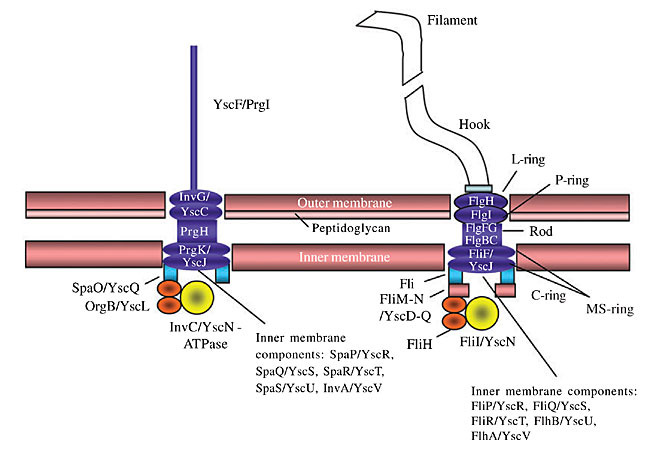
Anyway, I'm back doing frontline research again. And by a strange twist of fate it turns out that part of my research will be on the type III secretion system in bacteria (below on the left). This system shot to prominence during the Dover trial, as it is the very system that is proposed to be an evolutionary precursor to the flagellum (below on the right). See more about the relationship here, and a great talk by Ken Miller on it here. Of course, my research will be with respect to the infectious elements of the type III secretion system and so it is unlikely to overlap with its interesting role in refuting intelligent design.

Read More...

15 December, 2010

Going through the gears

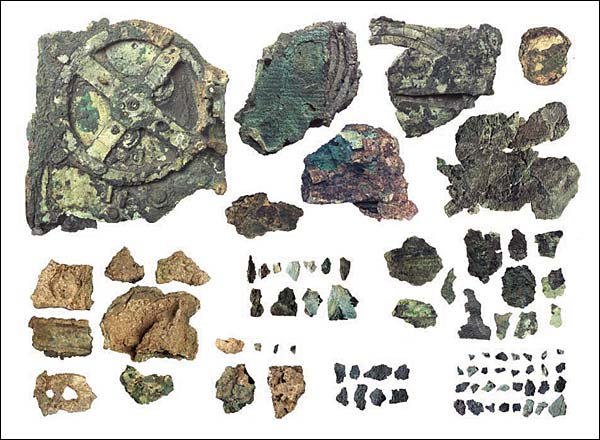
The Antikythera mechanism is the world's oldest known computer (150–100 BC). Various parts of this intricate cog-based instrument were discovered in a shipwreck back in 1900-1901, although the purpose of it, to accurately predict astronomical positions, was not determined until many decades later.


From a recent article in Nature:

Two thousand years ago, a Greek mechanic set out to build a machine that would model the workings of the known Universe. The result was a complex clockwork mechanism that displayed the motions of the Sun, Moon and planets on precisely marked dials. By turning a handle, the creator could watch his tiny celestial bodies trace their undulating paths through the sky.

The mechanic's name is now lost. But his machine, dubbed the Antikythera mechanism, is by far the most technologically sophisticated artefact that survives from antiquity. Since a reconstruction of the device hit the headlines in 2006, it has revolutionized ideas about the technology of the ancient world, and has captured the public imagination as the apparent pinnacle of Greek scientific achievement.


Now, some clever big kids have reconstructed it...

With freakin' LEGO!!


Read More...

03 December, 2010

Evolutionary morality - what's the problem?

Seriously, what is the issue that theists have with a non-devine account for morality? Let's settle this once and for all (he said naively).

Here is what I see as a perfectly rational account for evolutionary morality. The overall explanation is one of empathy and the so-called 'Golden rule' - treat others as you would like others to treat you. It is important to stress that this 'rule' is not the type of law that a theist would claim is prescribed from a deity. That is, we don't have to follow the golden rule, but most of us choose to because we can see the consequences of what would happen if we did not. For example, I wouldn't like it if someone stole from me, so I don't steal from other people. On the basis of this, I consider stealing to be wrong. When the majority of a population consider stealing to be wrong, the consensus usually becomes what is known as 'morality'. This still allows for a minority of a population to think differently - a thief might think it is OK to steal, or might think it is wrong but will do it anyway.

This leads us to moral relativism. More on this later, but first I want to get back to the evolution of morality...

All social animals have to co-operate to survive. This means that the survival of the herd is crucial for the survival of the individual. Any member of a population of social animals that ventures out on its own has a poor chance of survival - be it an isolated deer in a field or a lone mountaineer in the Alps. This is not to say that they cannot survive - some might - but in general there is safety in numbers.

Where'd they go?

Genes promoting co-operation and empathy, therefore, would be selected for in a social population, and through trial and error the 'golden rule' would unintentionally take hold. A population in which the 'golden rule' wasn't followed wouldn't sustain itself for very long, as its members would either kill each other or be killed by predators due to a lack of co-operation.

An interesting theory on the roots of morality and the Golden rule comes from game theory. This can be simplified (*extremely simplified*) into a game called the Prisoner's Dilemma. Here is a synopsis of the game from Wiki:

Two suspects are arrested by the police. The police have insufficient evidence for a conviction, and, having separated the prisoners, visit each of them to offer the same deal. If one testifies for the prosecution against the other (defects) and the other remains silent (co-operates), the defector goes free and the silent accomplice receives the full 10-year sentence. If both remain silent, both prisoners are sentenced to only six months in jail for a minor charge. If each betrays the other, each receives a five-year sentence. Each prisoner must choose to betray the other or to remain silent. Each one is assured that the other would not know about the betrayal before the end of the investigation. How should the prisoners act?

So the choice is to defect or co-operate. In a one-off situation, the obvious answer seems to be to defect. But it gets more interesting when, rather than being a one-off situation, the game is played continuously with previous actions remembered by the participants (as would occur in real life situations). The longer the game is played, a pay-off matrix emerges and the more likely it is that the participants will develop a strategy in which they actually co-operate most of the time, as when they defect, their opponent will simply retaliate in the next round.

Richard Dawkins has a chapter on the relationship between game theory and morality in the Selfish Gene. In it he explains how the above game can be applied to social animals in a 'you scratch my back, I'll scratch yours' type of way. Animals with the capacity to remember past events will reward those who co-operate and punish those who defect. This leads to a situation where the majority of a population will be co-operative, as they want to avoid the harsh penalties imposed on those who defect. From this interplay, co-operative behaviour (which loosely means 'being nice') becomes the norm and is considered to be 'moral'. Of course, if the vast majority of people are co-operative, then isolated incidences of defective behaviour can be rewarding, but it is ultimately unsustainable as the co-operative masses will retaliate. Importantly, all of this behaviour is still directly related to the Golden rule and is a consequence of the individual's desire to survive.

Evidence that co-operative behaviour with occasional retaliation is the optimal social standpoint is given by the computer program Tit-for-Tat that was entered into the iterated prisoners dilemma (IPD) tournament, a competition devised to develop the best strategy to win at repeated playing of the prisoners dilemma. Many complex computer programs were entered in the tournament, but Tit-for-Tat won using a very simple strategy:

It was the simplest of any program entered, containing only four lines of BASIC, and won the contest. The strategy is simply to co-operate on the first iteration of the game; after that, the player does what his or her opponent did on the previous move. Depending on the situation, a slightly better strategy can be "tit for tat with forgiveness." When the opponent defects, on the next move, the player sometimes co-operates anyway, with a small probability (around 1–5%). This allows for occasional recovery from getting trapped in a cycle of defections. The exact probability depends on the line-up of opponents

The story of Tit-for-Tat is well worth a read.

Based on the Tit-for-Tat program, the overall qualities needed to be socially successful are being nice, forgiving and non-envious but retaliating to defective behaviour when necessary. When you think about it, these qualites are exactly what any successful social animal possess:

- Unless provoked, the agent will always co-operate

- If provoked, the agent will retaliate

- The agent is quick to forgive

- The agent must have a good chance of competing against the opponent more than once.

Tit-for-tat, eventually...

Game theory, therefore, provides an intriguing and plausible reason for why humans are predominantly moral beings, and have the capacity to co-operate and forgive. Of course, none of this means that they have to be co-operative, although we have devised laws to punish those who are not. This is because there are no absolute moral laws; instead, there are evolutionary behaviours that allow populations to reach a sustainable equilibrium.

Which brings us back to moral relativism.

A typical theistic response to the idea of moral relativism (the position that moral propositions do not reflect absolute or universal truths) is to propose an emotionally-charged situation and claim that the moral relativist cannot claim that it is absolutely wrong. A common example is torturing or raping children. I have heard many theists claim that I can't say that torturing children is absolutely wrong. That may be true. But I can say it is wrong according to my moral standards because I would not like to be tortured, and so I imagine other people also don't like to be tortured (the fact that they are children is irrelevant - torture is torture).

It's a difficult subject to talk about, but one can imagine a hypothetical scenario in which torturing a child is acceptable, if, say, the alternative is that 100 children will be tortured. Horrible, I know, but I am simply making the point that emotionally-charged scenarios are not necessarily a fool-proof approach to tackling moral relativism. They do not actually have much substance other than to cloud the mind of an undecided observer in a debate.

However, if theists insist on using these types of emotionally-charged scenarios (and they do), then they can easily be used against the notion of divinely-inspired morality - a nice example of Tit-for-Tat in action! This is because if morality is simply the reflection of the nature of a deity, then it is dependent on something, and so it cannot be absolute. It is, in fact, completely arbitrary as the deity could have any number of whims or characteristics, which would automatically become entrenched in morality (see Euthyphro's dilemma). For example, if God (being omnipotent) decided tomorrow that child torture was morally good, would all Christians embrace it and actively engage in it? I very much doubt that they would. Why? Because morality exists apart from God.

Human morality came about through the evolution of social behaviour. That theists want to ascribe something as wonderful as morality to an unproven deity is just another example of how religion tries to fix what ain't broke.

Read More...